Guides
Before you act on equipment rental preventive maintenance checklist
A preventive maintenance checklist works when it names the machine, the interval and the person who signs off, not when it copies another yard's schedule.
What to take away
- Intervals come from the manufacturer's manual, OSHA and state rules, and your own failure history, in that order of authority. In Canada, provincial OHS rules sit at that second level.
- A checklist without a named sign-off and a date is a wish list.
- Downtime cost per machine decides which units get planned service first.
- Parts lead times, not labour, set how far ahead you schedule a rebuild.
- Every completed checklist is a record a tax authority or a safety officer can ask to see.
This article gives general rental business information. It is not maintenance, safety, tax or legal advice. Confirm duties with the manufacturer, OSHA or your state plan, and a qualified professional. In Canada, confirm with the provincial OHS authority.
Start with the machine, not the form
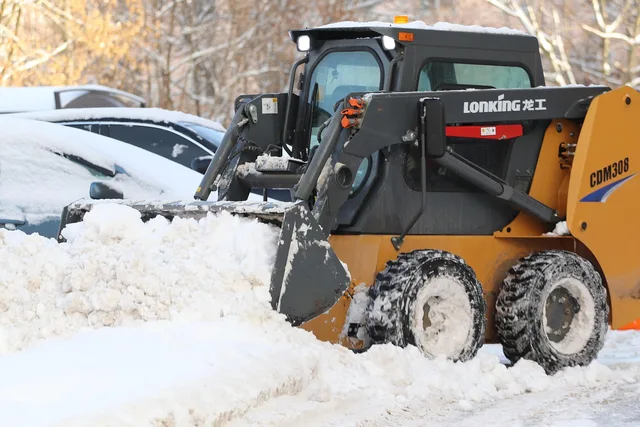
A generic checklist fails because a skid steer, a 12,000 lb telehandler and a towable generator do not share a service interval. Build the register first.
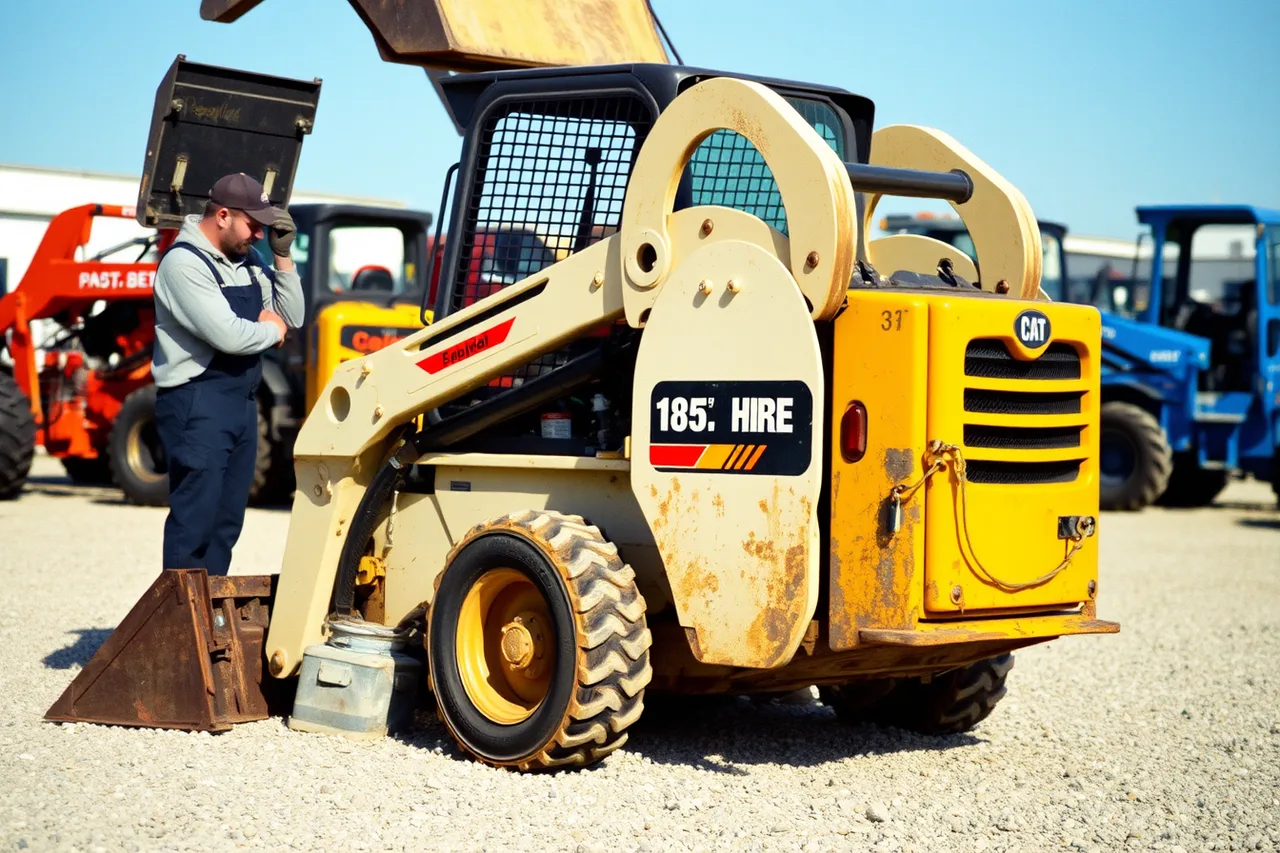
For each unit record the make, model, serial number, and hour meter reading. Also record the service interval from the manual and the last three repairs. That single line tells you when the next service is due and what it usually costs.
| Machine class | Item | Daily / pre-hire | 250 h | 500 h | 1,000 h |
|---|---|---|---|---|---|
| Skid steer | Engine oil and filter | Oil level | Change oil | Change oil and filter | Change oil and filter |
| Skid steer | Lift arm pins and bushings | Grease | Grease | Inspect | Replace as needed |
| Telehandler | Boom chains and wear pads | Visual check | Lubricate | Inspect tension | Replace as needed |
| Telehandler | Hydraulic hoses | Check for leaks | Inspect | Inspect | Replace as needed |
| Generator | Oil and coolant level | Check | Change oil | Change oil and filter | Change oil and filter |
| Generator | Belts and hoses | Visual check | Inspect | Inspect | Replace as needed |
Intervals are typical starting points. The manufacturer's manual overrides them.
Where intervals actually come from
The manufacturer's manual sets the baseline. OSHA rules and ANSI standards set the floor for guarding, lockout and inspection. In Canada, provincial OHS rules, CSA standards and CCOHS guidance do the same. Your own failure history then adjusts the interval up or down.
If a machine fails the same way twice inside one interval, the interval is wrong. Shorten it, or find out why the operator is pushing the unit past its rating.
Worked example: downtime cost per unit
You cannot rank machines by gut feel. Use your own numbers. The example below uses assumed figures for the arithmetic.
Telehandler: daily rate $280, utilization 0.6, days down 3, repair cost $1,200, transport $150.
- 280 x 0.6 x 3$504lost revenue = =
- 504 + 1,200 + 150$1,854total cost = =
Plate compactor: daily rate $60, utilization 0.15, days down 2, repair cost $400, transport $80.
- 60 x 0.15 x 2$18lost revenue = =
- 18 + 400 + 80$498total cost = =
The telehandler almost always wins the maintenance budget, because every day it sits broken is a day it cannot earn.
The sign-off that makes it real
Every service entry needs these fields:
- Date
- Hour meter reading
- Parts used, with part number and quantity
- Next service due, by date or hour meter reading
For lockout and energy control during service, follow OSHA 1910.147 where it applies. In Canada, follow the equivalent provincial rule. Only trained, authorized people perform that work.
Parts, lead times and the rebuild decision
Order critical spares before you need them. A hydraulic hose that ships in two days is a different planning problem from a control module that ships in six weeks.
Set a rebuild-or-replace gate with numbers you already have. Typical guidance: rebuild when repair cost is below about 50 percent of resale value and useful hours remain. Replace when repair cost passes roughly 60 percent of resale value, or when remaining hours drop below 20 percent of expected hours. Downtime cost per unit breaks the tie.
Records you will be asked for
Keep service records the way a tax authority expects records kept. The IRS recordkeeping guidance is a useful reference for what supports an asset claim. In Canada, CRA sets the equivalent.
Haulage between yards and job sites brings its own rules. For cargo securement on the road, check FMCSA cargo securement rules in the United States. In Canada, check the provincial commercial vehicle authority.
Common questions
How often should a rental unit be serviced?
Follow the manufacturer's interval, then adjust for hours used, environment and failure history. A machine on a dusty demolition site needs shorter intervals than the same model on a finished lot.
Who is allowed to service a rental machine?
The manufacturer, OSHA or your state plan, and your insurer all have a say. In Canada, the provincial OHS authority does too. Warranty terms often require dealer or authorized service for major work, so check before a technician opens the unit.
What happens if a checklist is skipped?
You lose the record that proves the machine was fit for hire. If an incident follows, that gap is the first thing an investigator asks about.