Guides
What CCOHS and CSA standards demand from Canadian equipment hire yards
Equipment rental business operations in Canada must follow CCOHS guidance and CSA standards, from yard chemicals to operator training and due diligence.
What to take away
- Canadian equipment hire yards answer to provincial OHS acts that CCOHS indexes, plus CSA standards: Z432-16 for guarding, Z460-13 for lockout and B335-15 for lift trucks.
- Employers must provide equipment, training and supervision, supervisors enforce the rules, and workers report hazards under the internal responsibility system.
- WHMIS/GHS requires a current safety data sheet for every hazardous product in the yard, and CSA B149.2 covers propane storage and handling.
- Operators need a documented pre-start check, lockout before maintenance and a defect sign-off before a machine leaves the yard.
- A due diligence defense rests on dated recordsinspection logs, repair sign-offs, training files and committee minutes that show the yard acted before an incident.
The legal framework: CCOHS acts index and OSH Answers fact sheets
There is no single federal OHS statute for a rental yard. Each province and territory writes its own act. The CCOHS acts and regulations index is the fastest way to find which one governs your location.
CCOHS guidance is not law. The acts that govern a Canadian equipment hire yard are provincial and territorial, and the regulators who enforce them are provincial and territorial. CCOHS indexes those acts and explains the duties in plain language.
Which OHS law applies
- Machine bought in Ontario
- Rented in Manitoba
- Inspected under Manitoba act
- Procedures name province and regulator
The index links to Ontario's OHSA, Alberta's OHS Act, BC's Workers Compensation Act and the rest, plus the federal Canada Labour Code for yards under federal jurisdiction.
That matters because a rental fleet crosses boundaries. A machine bought in Ontario and rented in Manitoba is still inspected under the Manitoba act at the point of use. The yard's written procedures have to name the province they were built for, and the regulator that inspects them.
Workers' compensation boards sit alongside the OHS acts. WorkSafeBC, WSIB Ontario, Alberta WCB and their counterparts handle claims and prevention audits. A yard with a poor inspection record can be audited. The audit asks for the same documents an OHS officer would.
The legal framework also touches Transport Canada for commercial vehicles and dangerous goods, and provincial environment ministries for fuel storage and spills. An equipment rental compliance checklist that ignores those overlaps will miss the tank in the corner of the yard.
CCOHS guidance comes in named fact sheets. The OSH Answers series includes 'Forklift Trucks', 'Lockout/Tagout', 'Machine Guarding', 'Aerial Work Platforms' and 'Due Diligence'. These pages explain the duty and point to the act or standard that carries it.
Start with the CCOHS acts and regulations index to confirm the act, the regulator and the compensation board for each province you operate in. Then map every yard to one primary act. A yard that treats all provinces the same usually fails the first inspection.
CSA standards for rental fleets: Z432, Z460, B335, B354, Z150 and more
The CCOHS standards page is the entry point for CSA and other standards cited in Canadian OHS material. It explains how standards are written, how they are referenced in law, and which ones appear in provincial regulations.
For a rental fleet, that page is where you confirm the exact standard before you cite it in a procedure.
Editions and reaffirmation years move. CSA lists the current edition, and any (R) reaffirmation, on its catalogue. Provincial regulations name the edition they adopt.
Confirm both before a standard number goes into a procedure. The 2018 editions of the Canadian Electrical Code and CSA Z462 have been replaced, and the propane code has moved past its 2015 edition.
CSA Z432-16 Safeguarding of Machinery covers machine guarding. CSA Z460-13 Control of Hazardous Energy covers lockout and other methods. CSA B335-15 Safety Standard for Lift Trucks covers forklifts. CSA B354.1, B354.2, B354.4 and B354.6 cover elevating work platforms. CSA Z150-16 Safety Code on Mobile Cranes covers cranes.
CCOHS hazards material on machine guarding and lockout is the plain-language companion to those standards. When a yard writes a pre-delivery inspection, the guarding and lockout checks come from that material and from CSA Z432-16 and CSA Z460-13, not from a generic checklist.
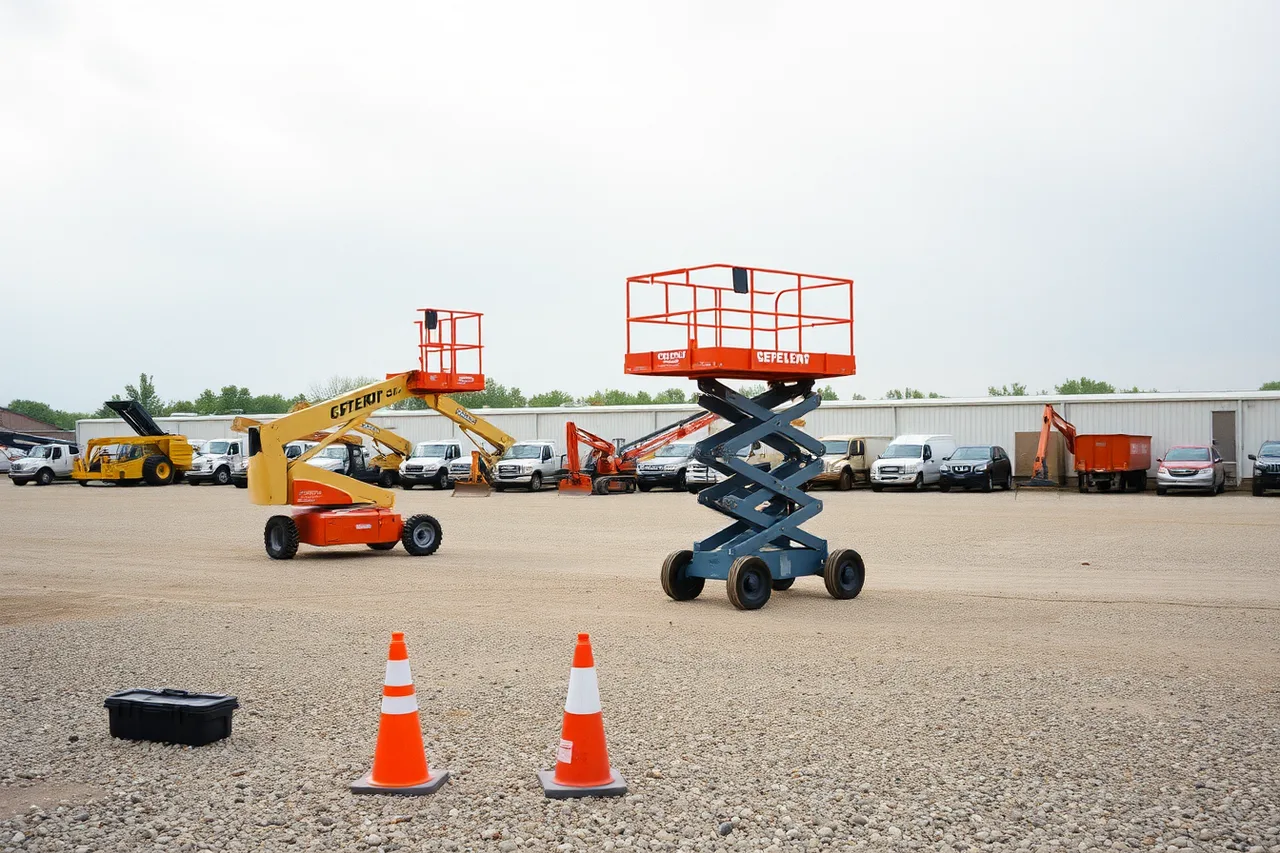
Aerial work platforms are a good example. CSA B354.1-04 (R2016), CSA B354.2-01 (R2016), CSA B354.4-02 (R2016) and CSA B354.6-17 set design, inspection and re-certification expectations. Provincial rules often reference them directly. A yard that rents boom lifts without a documented annual inspection is exposed, even if the machine looks fine.
Forklifts and telehandlers follow a similar pattern. CSA B335-15 defines the machine. The provincial regulation defines who may operate it and what training is accepted. The two documents have to be read together.
Pressure vessels, slings, rigging and fall protection also carry CSA standards. CSA Z259.10-12 covers full body harnesses. CSA Z259.11-17 covers personal energy absorbers and lanyards. CSA Z259.2.2-17 covers self-retracting devices. A rental counter that hands out a chain sling without an inspection record is handing out liability.
Use the CCOHS standards page to confirm the standard number and edition. Then write the inspection line that references it. A procedure that says 'inspect per CSA' without the number is not a procedure.
CSA standards for rental fleets
| Machine class or hazard | Named CSA standard | Yard record that proves it |
|---|---|---|
| Aerial platforms | CSA B354.1-04 (R2016), CSA B354.2-01 (R2016), CSA B354.4-02 (R2016), CSA B354.6-17 | Annual inspection sheet, service log |
| Forklifts and telehandlers | CSA B335-15 Safety Standard for Lift Trucks | Pre-start form, operator evaluation |
| Cranes and rigging | CSA Z150-16 Safety Code on Mobile Cranes, CSA Z150.3-17 Safety Code on Articulated Boom Cranes | Load test record, sling log |
| Compaction and earthmoving | CSA Z432-16 Safeguarding of Machinery, CSA Z460-13 Control of Hazardous Energy | Delivery inspection, defect sign-off |
| Small tools and pumps | CSA C22.1 Canadian Electrical Code, Part I (current edition), CSA Z462 Workplace Electrical Safety (current edition) | Tag system, repair history |
| Lockout | CSA Z460-13 Control of Hazardous Energy: Lockout and Other Methods | Lock and tag log, isolation procedure |
| Fall protection | CSA Z259.10-12, CSA Z259.11-17, CSA Z259.2.2-17 | Harness inspection sheet, training record |
| Propane storage | CSA B149.2 Propane Storage and Handling Code (current edition) | Cylinder exchange log, leak check form |
| First aid | CSA Z1220-17 First Aid Kits for Workplaces | Kit inspection card, refill log |
| PPE | CSA Z94.1-15, CSA Z94.3-15, CSA Z195-14, CSA Z94.4-18 | Issue log, fit test record |
| Confined spaces | CSA Z1006-16 Management of Work in Confined Spaces | Entry permit, gas test record |
| OHS management | CSA Z1000-14 Occupational Health and Safety Management | Program review, audit schedule |
| Risk assessment | CSA Z1002-12 Hazard Identification and Elimination and Risk Assessment and Control | Risk register, control sign-off |
WHMIS/GHS and SDS duties for fuels and chemicals stored in yards
Every rental yard stores fuels, oils, greases, coolants, cleaners and propane. WHMIS/GHS applies to all of them. The CCOHS WHMIS/GHS/SDS topic page sets out supplier label, safety data sheet and worker training duties. The SDS must be available to workers in the yard, not locked in an office.
GHS changed the labels and the SDS format. A yard still using old MSDS sheets is out of step. An inspector can ask for the current SDS at any time. Suppliers must provide them, but the employer keeps them accessible and trains workers on the hazards.
Fuel storage adds a second layer. Provincial environment ministries regulate above-ground and underground tanks, spill kits and secondary containment. CSA B149.2 covers propane storage and handling. A yard with a diesel tank needs both the WHMIS paperwork and the environmental registration.
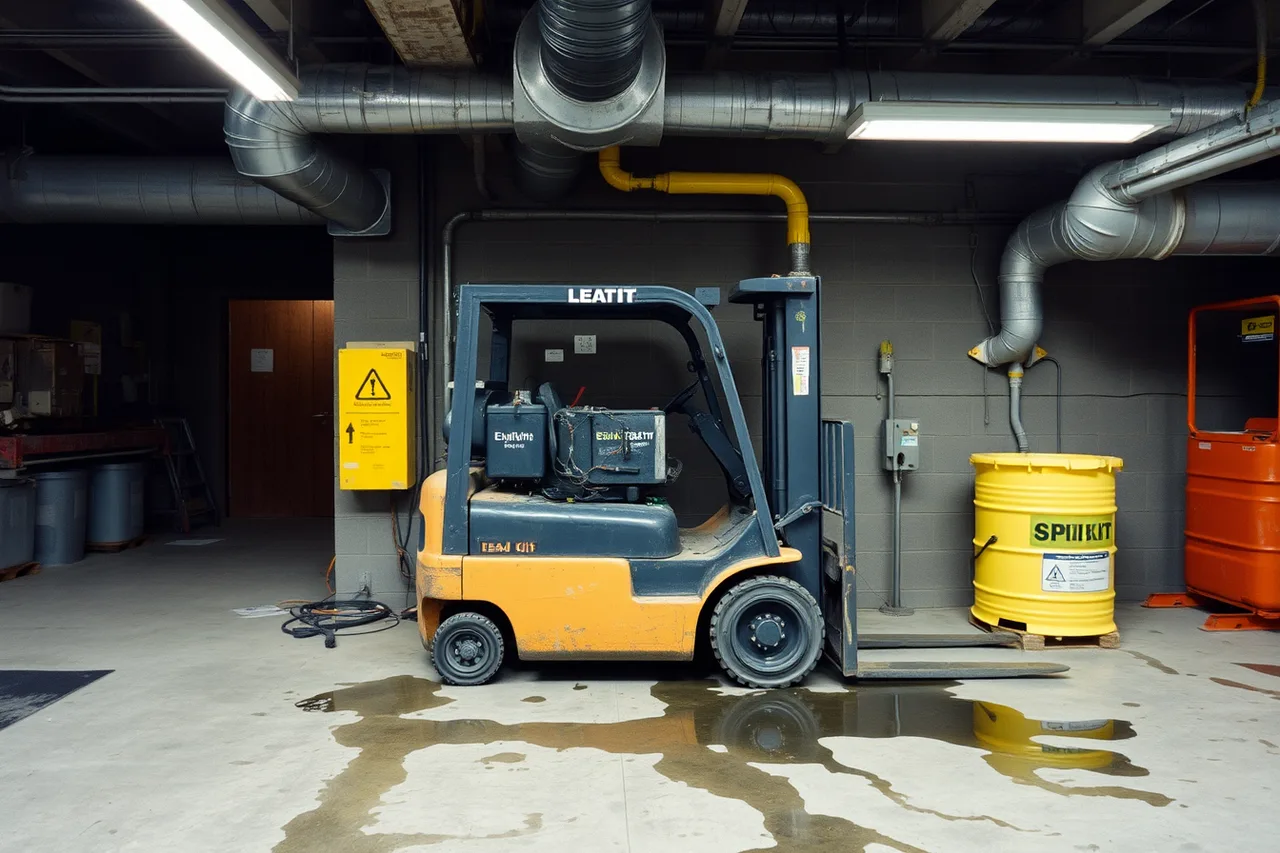
Battery charging areas are another WHMIS zone. Forklift batteries vent hydrogen and contain acid. The SDS, eyewash and ventilation all belong in the same procedure. The same applies to propane exchange cages.
Training is the part yards skip. WHMIS training must be workplace-specific. It covers the products actually stored and the tasks workers perform. A generic online module does not cover the spill kit location or the tank valve.
Keep a chemical inventory for each yard and match it to the SDS binder. Review it when products change. This is also where an equipment rental maintenance checklist earns its place. Fluid top-ups and tank checks sit inside the same routine.
Inspection and documentation duties for operators
Operators of rental equipment carry inspection duties before, during and after use. The exact wording sits in provincial OHS regulations and in the CSA standard for the machine class. What matters for a yard is that the duty is documented.
Operator inspection sequence
- Pre-start walk-around and fluid check
- Lockout and tag before maintenance
- Record machine ID, date, operator, defect
- Post-use check-in, clean, fuel, inspect
- Log defect, repair, sign off before release
A pre-start inspection is the baseline. The operator walks the machine, checks fluids, guards and controls, then records the result. A defect found at this stage is a repair order, not a note on a pad.
Lockout is the next duty. Before any maintenance or repair, the machine is isolated, locked and tagged. CCOHS safety material on lockout and guarding explains the sequence, and CSA Z460-13 sets the method. A yard without locks and tags on hand is asking for a serious incident.
Documentation has to survive the shift. Paper forms get lost, so many yards use a tablet or a shop log with a supervisor sign-off. The record needs the machine ID, the date, the operator name and the defect status.
Post-use inspection matters for rental yards because the next customer inherits the risk. A returned machine is checked in, cleaned, fueled and inspected before it goes back on the shelf. That check is the yard's proof it did not send out a known defect.
Defect tracking closes the loop. A defect is logged, assigned, repaired and signed off. The machine does not leave until the sign-off exists. This is the same discipline that shows up in equipment rental maintenance.
Operators also need to know when to stop. A written rule that any operator can refuse an unsafe machine, without penalty, is part of the internal responsibility system and part of the due diligence record.
Internal responsibility system and joint health and safety committees
The internal responsibility system is the Canadian OHS model. Everyone in the workplace, from the yard manager to the newest laborer, shares the duty to identify and control hazards. It is not a committee-only job.
Who does what in the IRS
Employer
- Equipment
- Provide
- Training
- Provide
- Hazards
- Control
- Supervision
- Ensure
Supervisor
- Equipment
- Verify
- Training
- Enforce
- Hazards
- Correct
- Supervision
- Carry out
Worker
- Equipment
- Use
- Training
- Follow
- Hazards
- Report
- Supervision
- Accept
Provincial acts spell out the roles. Employers provide the equipment, training and supervision. Supervisors ensure the work is done safely. Workers report hazards and follow procedures. A rental yard that treats safety as the manager's problem breaks the system.
Joint health and safety committees are required at certain workplace sizes, and the threshold varies by province. Ontario and BC, for example, have their own rules on when a committee or a health and safety representative is required. The committee meets, inspects the workplace and makes recommendations.
A yard committee needs real scope. It should walk the yard, review incidents and near misses, and track recommendations to closure. Minutes that record only attendance are not evidence of a functioning system.
The committee is also where the equipment rental sop checklist lives. Daily opening and closing routines, fuel checks, battery charging and yard traffic rules are all committee business when they affect worker safety.
Worker training on the internal responsibility system is part of the deal. New hires need to know how to report a hazard and what happens next. A yard that trains only on machine operation misses half the system.
Due diligence defense for yard compliance programs
Due diligence is the defense an employer raises when charged under an OHS act. It says the employer took every reasonable step to prevent the offense. The CCOHS due diligence topic page explains the concept and the evidence that supports it.
Due diligence evidence file
- Written OHS programme
- Training records by operator
- Inspection logs with dates
- Repair sign-offs and corrective action
- Committee minutes and maintenance history
A written program, a training record, an inspection log and a repair sign-off all show the yard acted. A yard with a good program but no records has no defense.
Reasonable steps depend on the risk. A yard that rents cranes and aerial platforms faces higher risk than one that rents lawn equipment, so the program has to match the fleet. The same logic applies to the chemicals stored and the traffic in the yard.
Supervision is part of the test. An employer must show that supervisors knew the rules and enforced them. A supervisor who signed off on an uninspected machine undermines the whole defense.
Corrective action matters. When an inspection finds a defect, the record should show the fix, the date and the person responsible. A pattern of unresolved defects looks like a system that was not working.
Document retention is the practical side. Keep training records, inspection logs, committee minutes and maintenance history for the period your province requires. Digital records are fine if they are backed up and retrievable.
This is also where equipment rental quality control overlaps with safety. A quality check that catches a defect before delivery is both a customer service win and a due diligence record.
A yard that wants a working program can build it in this order:
Due diligence defense
- Record the governing act and regulator for each yard in the written program.
- Write the inspection, lockout and defect sign-off procedures for each machine class.
- Build the SDS binder and chemical inventory for every yard.
- Set the committee or representative structure and its meeting schedule.
- File training records, inspection logs and corrective actions in one retrievable system.
Training and certification requirements for equipment operators
Operator training is regulated by province and by machine class. There is no single national ticket for a forklift or an aerial platform. Some provinces have certification schemes. Others rely on employer training to a standard.
Operator training record contents
- Operator name
- Machine class
- Trainer name
- Training date
- Evaluation result
- Refresher currency date
Forklifts are the common case. Most provinces require training and evaluation, and many reference CSA B335-15 for the machine. A yard that rents forklifts should confirm the customer's operators are trained, or provide the training itself.
Aerial work platforms follow a similar pattern. Some provinces require a specific certification, and CSA B354.6-17 defines the machine. A boom lift rental without a trained operator is a serious exposure.
Cranes, diggers and other heavy equipment may require provincial tickets or trade certification. The yard's role is to know which machines need what, and to keep that list current.
Training records belong in the file. The record should name the operator, the machine class, the trainer, the date and the evaluation result. A certificate without an evaluation is weak evidence.
Refresher training is part of the duty. A worker who has not run a machine in a year needs a re-evaluation before operating it again. The yard's rental counter should be able to confirm the operator's currency.
Customers also need information. A rental yard should hand over the operator manual, the inspection form and the safety rules with the machine. That handover is part of the training duty and part of the due diligence record.
Before a machine leaves the yard, the counter can run this checklist:
- Operator manual and safety rules handed over
- Pre-delivery inspection signed by a supervisor
- Training or certification record on file for the machine class
- SDS and spill kit location confirmed for fueled machines
- Defect log checked and clear for this unit
- Return inspection booked and assigned