Guides
What equipment rental downtime actually costs once the work gets delivered
Equipment rental downtime costs extend past the repair invoice with idle crews, re-mobilization fees, and lost repeat work on every failed delivery.
What to take away
- A machine that fails on site costs far more than the repair. The customer's idle crew, the second trip, and the lost repeat order are the real bill.
- Build the number from four partslost rental days, crew standby, re-mobilization, and the lifetime value of a customer who does not come back.
- Track mean time between failures and mean time to repair per machine class. Both feed the same downtime figure.
- Keep a critical spares list tied to the preventive maintenance schedule, so a repair starts the hour the machine comes in.
- Rate your own fleet against the market before you price a replacement, using the rental market outlook.
The invoice is the smallest part of the bill
A hydraulic hose fails on a mini excavator at 7 a.m. on a Tuesday. The hose costs $180. The mechanic is on another job until noon.
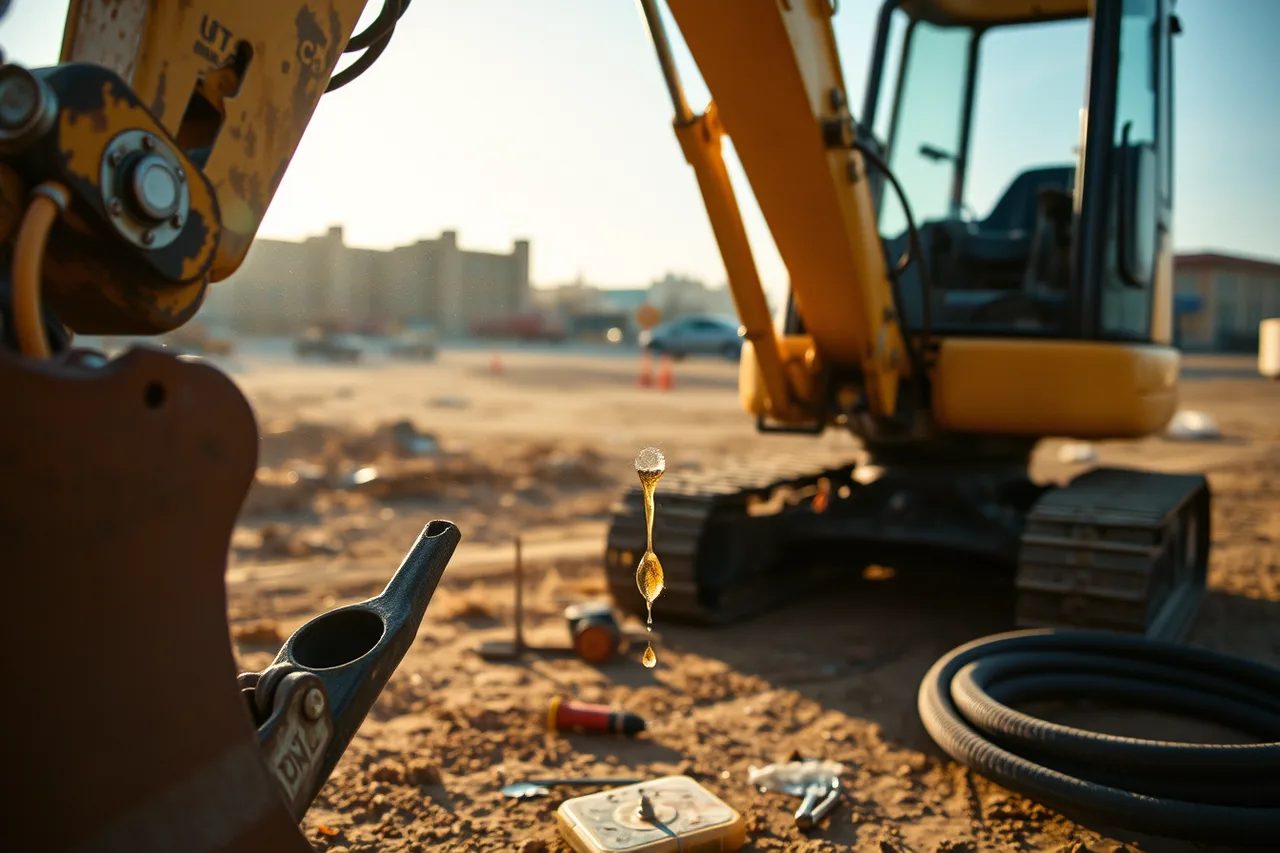
The customer's three-person crew stands down for five hours. That is the cost nobody writes down.
Downtime cost is the sum of what you lose and what the customer loses. Only one of those appears on your books.
Build the number from four parts
Work in named variables. Substitute your own figures.
| Cost component | How to calculate it | Whose cost |
|---|---|---|
| Lost rental days | Daily rate x days the unit cannot earn | Yours |
| Crew standby | Crew size x hourly loaded wage x hours idle | Customer's |
| Re-mobilization | Second delivery trip + pickup + fuel surcharge | Yours |
| Lost repeat business | Annual revenue per customer x expected retention drop | Yours |
A single failed delivery on a $400-a-day machine, down three days, with a four-person crew idle for six hours, is a five-figure event once you add the customer's standby time and the second trip.
The customer remembers the number. You invoice the hose.
Measure failure rate, not just repair time
Two numbers drive the model. Mean time between failures tells you how often a machine class lets you down. Mean time to repair tells you how long the customer waits.
Track both by machine class, not fleet-wide. A telehandler and a plate compactor fail differently and cost differently.
A class with a short repair time and a high failure rate still bleeds money. Each failure triggers a delivery, a pickup, and a phone call.
Standby time is the customer's cost, and they price it back to you
A crew on standby still draws wages, benefits, and equipment overhead. Contractors recover that by adding risk to your rate or by renting elsewhere next time.
Ask your top ten accounts what a down machine costs them per hour. Most will tell you. That figure is your service-level target.
If your mean time to repair exceeds their tolerance, you are selling them a risk they will not keep buying.
Spares and service capacity decide the repair clock
A repair cannot start without the part and the person. Both are capacity decisions, not luck.
Keep a critical spares list per machine class: filters, hoses, batteries, wear items, and the one sensor that stops the unit. Set reorder levels against supplier lead time, not shelf space.
Service capacity works the same way. If two mechanics cover forty units in construction season, the third failure of the week waits until Thursday.
Where the compliance side bites
Cargo securement failures cause downtime you cannot schedule around. The FMCSA cargo securement rules set the performance duty for loads in interstate transport, including roll-on and roll-off containers.
Servicing a machine with stored energy still in it is how a planned repair becomes an injury and a long shutdown. OSHA's lockout/tagout standard requires energy-control procedures for covered employers. Name the manufacturer and your provincial OHS authority for the procedure that fits your machine, and put operators through certified training.
Keep records that survive an audit
Your downtime model is only as good as the repair history behind it. The IRS recordkeeping guidance sets out what a business should retain to support income, expenses, and asset transactions.
Log every failure with the date, machine hours, cause, part, and repair hours. That log is what turns a guess about downtime into a rate you can defend to a lender or an insurer.
Worked example: one machine, one season
Take a 5-tonne excavator rented at $400 a day, 200 rental days a season.
It fails three times. Each failure costs two lost rental days, one second delivery trip at $150, and four hours of a four-person crew at $45 an hour loaded.
- 3 x 2 x $400$2,400Lost rental days
- 3 x $150$450Second trips
- 3 x 4 x 4 x $45$2,160Crew standby
- $5,010Total
That is before the customer who does not rebook. If one in five of those customers leaves, and each is worth $6,000 a year, add $3,600.
The hose was $180.
Common questions
What counts as equipment rental downtime cost?
It is every cost triggered by a machine that cannot do the work it was rented for. That includes your lost rental days and second trips, plus the customer's idle crew and the repeat business you lose. The repair invoice is usually the smallest line.
How do I estimate downtime cost without historical data?
Use the four-part model with your own rates and a conservative failure count. Substitute your daily rate, crew size, loaded wage, and delivery cost. Revise the model after one season of logged failures.
Does a low repair cost mean low downtime cost?
No. A cheap, fast repair on a machine that fails weekly still costs delivery trips, phone calls, and customer patience. Track mean time between failures alongside repair cost, by machine class.
Should I hold more spares to cut downtime?
Only the spares that sit on the critical path for your busiest classes. Set reorder levels against supplier lead time and failure rate. Holding every part ties up cash that a seasonal rental fleet needs elsewhere.