Guides
How CRA GST HST rules shape Canadian equipment hire yard invoices
Equipment hire yards in Canada must apply GST, HST, QST or PST correctly on every rental invoice, and file with CRA on time to avoid penalties.
What to take away
- Tax follows the place of supplythe delivery address or pickup point, not the yard address.
- Registration is mandatory once taxable supplies pass $30,000 over four consecutive calendar quarters.
- Monthly filing starts above $1.5 million in annual taxable supplies; quarterly sits below it; annual filing needs an election.
- A late return costs 1% of the net tax owing plus 0.25% per month, and doubles after a repeat failure within four years.
- A GST/HST number looks like 123456789RT0001 and must appear on invoices of $30 or more.
Which sales tax a rental invoice carries
A rental invoice can carry GST, HST, QST or PST, sometimes two at once. GST is the 5% federal tax. HST merges the federal and provincial shares into one line at 13% or 15%.
The place of supply decides which applies. CRA ties the tax to where the customer takes possession or where the machine is delivered, so CRA's guidance on which rate to charge is worth keeping open while you build invoice templates.
An Alberta yard that delivers a lift to a Saskatchewan site invoices Saskatchewan PST plus GST.
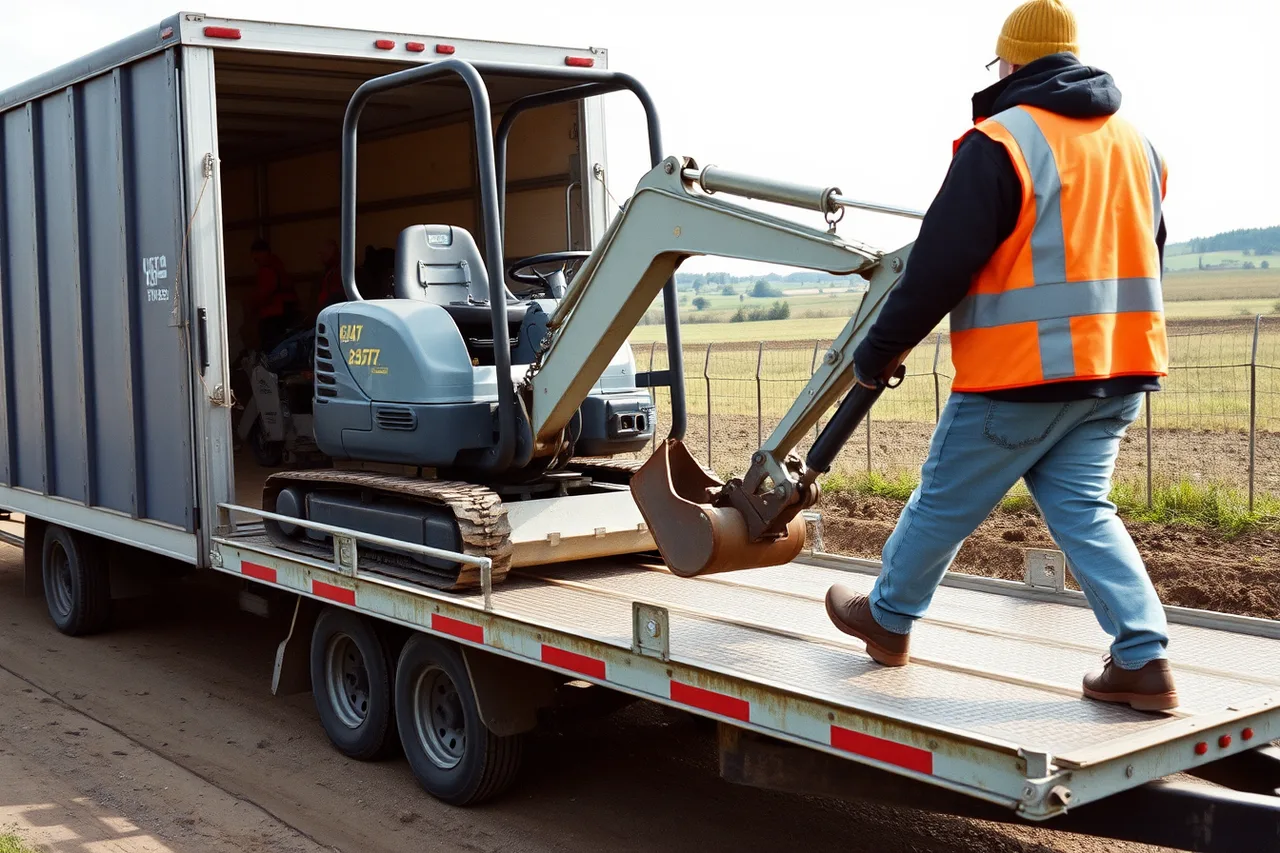
Bundled charges follow the main supply. An operator, fuel or damage waiver billed with the machine is taxed at the rental rate. Deposits are not revenue until applied, so show them as an untaxed line.
Keep the same tax lines from quote to invoice so the customer sees one number. This equipment rental quote template with pricing examples lays out the tax block.
The rate table for your invoice template
Set invoice tax lines from this table, then confirm current rates before printing new templates.
| Province or territory | GST | Provincial portion | Combined rate on rentals |
|---|---|---|---|
| Alberta | 5% | none | 5% GST |
| British Columbia | 5% | 7% PST | 5% GST plus 7% PST |
| Manitoba | 5% | 7% PST | 5% GST plus 7% PST |
| Saskatchewan | 5% | 6% PST | 5% GST plus 6% PST |
| Ontario | 5% | 8% provincial | 13% HST |
| Quebec | 5% | 9.975% QST | 5% GST plus 9.975% QST |
| New Brunswick | 5% | 10% provincial | 15% HST |
| Nova Scotia | 5% | 10% provincial | 15% HST |
| Prince Edward Island | 5% | 10% provincial | 15% HST |
| Newfoundland and Labrador | 5% | 10% provincial | 15% HST |
| Northwest Territories | 5% | none | 5% GST |
| Nunavut | 5% | none | 5% GST |
| Yukon | 5% | none | 5% GST |
Quebec is the administrative exception. Revenu Quebec collects QST, so a yard registered there files with the province as well as with CRA. British Columbia, Saskatchewan and Manitoba run their own PST programs.
Registering and the small supplier threshold
The small supplier threshold is $30,000 in taxable supplies over four consecutive calendar quarters. Cross it and registration is mandatory. Stay below it and registration stays voluntary.
A yard in its first year can sequence tax filing with licensing and insurance through this equipment rental compliance checklist for new owners.
CRA's guidance on when to register and start charging the GST/HST gives the timing, including the rule that a voluntary registrant must stay registered for at least a year.
Registration opens input tax credits on fuel, parts and shop supplies. Without those receipts, the tax comes out of margin.
A GST/HST number is a nine-digit business number, the letters RT and four digits, such as 123456789RT0001. Invoices of $30 or more must show it with your name, the date and the tax.
- Business number, or an application in progress
- Legal name and operating name
- Yard address and mailing address
- Banking details for pre-authorized debit
- The quarter you crossed $30,000
Example: the same excavator, three provincial totals
A 5-tonne excavator rents for one week at $2,400, with $150 delivery and a $75 damage waiver, so the subtotal is $2,625.
Ontario adds 13% HST of $341.25, giving a $2,966.25 invoice. A Saskatchewan site pays $131.25 GST plus $157.50 PST, or $2,913.75. A Quebec site pays $131.25 GST plus $261.84 QST, or $3,018.09.
One machine, three invoice totals, and two of them require a second tax filing.
Filing deadlines, penalties and a remittance routine
Filing frequency follows annual taxable supplies. Above $1.5 million you file monthly. At $1.5 million or less you file quarterly, or annually if you elect and qualify.
Returns are due one month after the end of the reporting period. Annual filers with a December year end generally file by the end of March.
The late-filing penalty is 1% of the net tax owing, plus 0.25% for each complete month the return is late, capped at 12 months. CRA's penalty page sets out both tiers.
CRA doubles that rate when it charged you a late-filing penalty for a return due in the previous four years. Interest compounds daily at the prescribed rate, reset each quarter and recently in the 9% to 10% range.
Tax collected is not working capital, so a weekly routine keeps it clear of the operating account.
- Move the tax from each invoice into a separate tax account every Friday.
- Reconcile that account against issued invoices at month end.
- Keep the fuel, parts and repair receipts that support your input tax credits.
- File the return in CRA My Business Account before the due date.
- Pay through pre-authorized debit on the day you file.
Weekly tax remittance routine
- Move tax collected into a separate account each week
- Reconcile account against filed invoices at month end
- Pay the balance before the due date
- File the return even if you cannot pay in full
- Review the account quarterly with your bookkeeper
Rate setting is a separate decision from tax. This guide to fair-margin pricing for equipment rental services covers what to charge before tax.
Records and rebates when a machine crosses a border
Keep five records for every machine that crosses a provincial line: the delivery ticket, the contract showing the site address, the invoice with both tax lines, the purchase receipt and proof of remittance. CRA expects records kept for six years.
A registered yard recovers most tax through input tax credits. Rebates cover the remaining gaps, and purchase tax is a real cost until a refund clears.
Example: a yard buys a machine in British Columbia, pays 7% PST and trucks it to Alberta. BC administers its own refund for goods removed from the province. On the federal side, form GST189 is the general rebate application, normally due within two years of the date the rebate became payable.
Quebec rental invoices in French
Quebec customers receive French invoices. TPS labels the federal tax and TVQ labels the Quebec tax, each on its own line.
A compliant Quebec invoice shows the supplier name and address, both registration numbers, the invoice date, the equipment description, the subtotal, TPS at 5%, TVQ at 9.975% and the total.
Bill 101 reaches beyond invoices into contracts, signage and workplace documents, and this guide to Quebec CNESST and Bill 101 compliance for Montreal equipment hire yards covers those duties.