Guides
An equipment rental equipment checklist for the first job, not the tenth
A first-job equipment rental checklist names the machines, the tie-down gear, the fuel cans and the inspection records before the truck leaves the yard.
What to take away
- The first job sets the equipment rental checklist, not the other way round. Write down the work you accepted, then list the machines that do it.
- Owned, rented and subcontracted capacity are three different costs. Pick per job, not per preference.
- Securement gear is part of the checklist. FMCSA cargo rules and OSHA powered-industrial-truck rules both apply to how a yard loads and moves machines.
- Every machine needs a named person, a service interval and a record. Untracked equipment is the one that fails on site.
- Test one machine on one job before you buy the second one. Fleetwide adoption follows evidence, not a supplier demo.
Start with the work, then the iron
A first job tells you what to buy. Trench work starts with a Kubota U17-3 mini excavator, a Wacker Neuson forward plate compactor and a 3 inch trash pump. Event setup starts with a Genie GS-1930 scissor lift, a Honda EB10000 generator and cable ramps.
Write the job scope first. Then write the machine that does each line of it. Anything left over stays unbought.
This is the same discipline behind an equipment rental business plan: the plan describes the work, and the fleet follows.
The checklist
First-job machine day rates
Machine
- Mini excavator
- 8 ft dig
- Track loader
- Bobcat T66
- Plate compactor
- Wacker Neuson
- Scissor lift
- 19 ft platform
- Boom lift
- 45 ft platform
- Telehandler
- 6,000 lb
Spec
- Mini excavator
- $250-400
- Track loader
- $300-500
- Plate compactor
- $60-100
- Scissor lift
- $150-275
- Boom lift
- $350-600
- Telehandler
- $300-500
Day rate
- Mini excavator
- Track loader
- Plate compactor
- Scissor lift
- Boom lift
- Telehandler
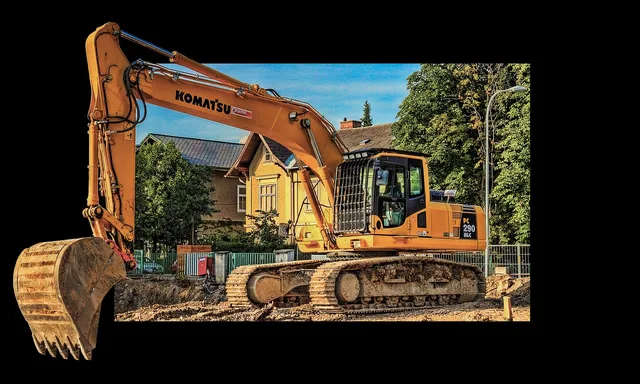
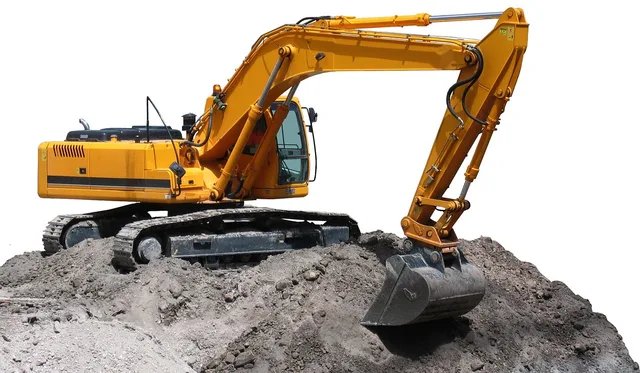
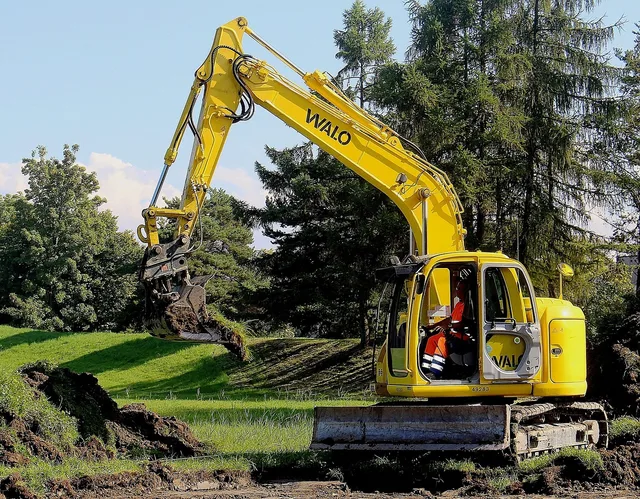
- Excavation and earthmoving.Kubota U17-3 mini excavator, about 3,750 lb and digging to roughly 8 ft. Bobcat T66 compact track loader. Wacker Neuson forward plate compactor. Ditch Witch RT12 walk-behind trencher, about 2 ft deep. Match bucket width to the trench spec before pickup. Typical day rates in most US markets as of 2026: $250 to $400 for the mini excavator, $300 to $500 for the track loader, $60 to $100 for the plate compactor.
- Lifting and access.Genie GS-1930 scissor lift, 19 ft platform and 500 lb capacity. JLG 450AJ boom lift, 45 ft platform. SkyTrak 6036 telehandler, 6,000 lb capacity and 36 ft reach. Check platform height against the task, not the tallest unit on the lot. Scissor lifts run $150 to $275 a day, boom lifts $350 to $600, telehandlers $300 to $500.
- Power and light.Honda EB10000 generator, 9,000 W continuous and 10,000 W peak. Magnum MLT4060 light tower with four 1,000 W lamps. A 100 A distribution panel and 12/3 extension cords rated for the run. Size the generator to the largest single load, not the sum of nameplates.
- Air and water.Atlas Copco XAS 185 towable compressor, 185 CFM at 100 psi. Bosch BH2760VC 60 lb breaker. A 3 inch trash pump and a hose kit. Confirm the compressor's CFM against the tool's rating. Expect $150 to $250 a day for the compressor and $60 to $110 for the breaker.
- Concrete and compaction.A 9 cu ft mortar mixer, a Bomag BW 120 tandem vibratory roller, and a Husqvarna FS5000D concrete saw with a blade matched to cured or green concrete.
- Securement gear.Grade 70 transport chain in 5/16 in at a 4,700 lb working load limit, or 3/8 in at 6,600 lb. Lever binders and 2 in ratchet straps rated at 3,333 lb WLL. Wheel chocks, edge protectors and screw-pin shackles. FMCSA's cargo securement rules set the working-load limits and the performance duty for the tie-down system. Aggregate tie-down WLL must reach at least half the machine's weight, so a 5,000 lb unit needs 2,500 lb of rated capacity.
- Attachments.Bucket teeth, augers, hydraulic breakers, pallet forks and grapples. Each one has its own capacity limit and its own wear point.
- Inspection and calibration.Pre-delivery inspection sheet, hour meter reading, and a 3/4 in drive torque wrench for attachment bolts. A pressure gauge for tires and hydraulics, plus a calibration sticker where the tool measures.
- Documents and custody.Signed rental agreement, damage waiver and operator authorization. Service history, warranty card and return condition photos.
- Consumables.Diesel, DEF, hydraulic oil and grease. Filters, blades, teeth and gloves, plus a spill kit.
Owned, rented or subcontracted
Three capacity models, three cost shapes. Owned equipment carries capital, insurance, storage and idle time. Rented equipment carries a day rate and a return deadline. Subcontracted capacity carries a supplier's margin and their schedule.
Own, rent or subcontract
How often do you need the machine?
Twice a year -> rent it
Twice a week -> own it
Track utilization per machine. A unit below roughly a third of available days is a candidate for the rental channel next season. The arithmetic is your own: owned days divided by available days, against the day rate you would have paid.
A 19 ft scissor lift rents for $1,200 to $2,000 a month in most US markets and lists new around $18,000 to $30,000.
Inspection, training and the named person
Every machine gets a named operator and a named service interval. OSHA's safety management guidance treats finding and fixing hazards before an incident as the program, not the paperwork after one.
Operator training and inspection cycle
- Every shiftPre-shift examination of each truck
- Every 3 yearsOperator evaluation and reevaluation
- OngoingCertified training renewed, not assumed
- Per machineNamed operator and service interval
Powered industrial trucks are the yard's highest-risk category. OSHA's powered industrial trucks page covers operator competence, inspections, pedestrian traffic and the difference between equipment types. Training is certified, not assumed, and it is renewed.
Under 29 CFR 1910.178(l), operators are trained, evaluated and reevaluated at least every three years. Clause 1910.178(q)(7) requires a pre-shift examination of each truck. Aerial lift operators follow ANSI A92.24.
Nothing here replaces the manufacturer's manual or a certified trainer. Confirm the requirement with the manufacturer, your provincial or state OHS authority, and a qualified trainer.
Before the truck leaves
Run the pre-delivery inspection. Confirm the tie-down system matches the machine's weight and the trailer's rating. Photograph the load and the hour meter. Check the operator's authorization is on file.
Then test one machine on one job before standardizing. Compare accuracy, downtime, parts availability and operator feedback against the alternative you rejected. Buy the second unit on that evidence.
Common questions
What belongs on a first-job equipment checklist?
The machines the accepted scope needs, the attachments each machine needs, the securement gear rated for their weight, and the inspection and custody records. If a line item does not map to a task on the contract, it stays off the list. A trench job might need four machines.
How do I decide between owning and renting a machine?
Compare owned days against available days, then against the day rate you would have paid. Low utilization favors renting. Frequent, predictable use favors owning. Peak-only demand favors subcontracting. Rental yards in most US markets quote mini excavators near $900 to $1,300 a week, which sets the bar for a buy decision.
Which rules apply to moving machines on a trailer?
FMCSA cargo securement rules govern the tie-down system for interstate moves, and provincial or state transport authorities govern local ones. Confirm applicability with the authority that sets it and with a qualified transport advisor.
Who may operate the equipment?
Only trained, authorized operators. OSHA and provincial OHS authorities set the training and competence expectations, and manufacturers set the machine-specific limits. Confirm with a certified trainer before anyone runs a unit.