Guides
Equipment rental equipment: ownership tests and legal duties
Equipment rental equipment: the utilization and downtime tests for owning, renting or subcontracting, plus the FMCSA, OSHA and IRS duties a yard must meet.
What to take away
- Price each machine using utilization and downtime cost, not just sticker price. Long idle periods can make even a low-priced unit uneconomic.
- Match the access model to the work. Own what runs often and predictably, rent what spikes, subcontract what needs a certification you do not hold.
- Cargo securement is a legal duty on every delivery, not a yard habit. The FMCSA rule sets the performance standard for interstate moves.
- Every operator of a powered industrial truck needs demonstrated competence on that truck class, documented, before they touch a customer machine.
- Keep records that show income, expenses and asset history. The IRS recordkeeping guidance is the plainest statement of what a file has to prove.
Equipment rental equipment decisions involve utilization, ownership choices, delivery securement, operator competence and records. This article covers equipment rental operations in general terms. It is an operational overview, not a substitute for checking the requirements that apply to your state, machine, site and customer. Confirm current duties with the manufacturer, the relevant authority and a qualified professional.
Utilization and downtime inform ownership decisions
A machine earns only while it is out. Utilization is hours billed divided by hours available in the period. Run that for each unit, not for the fleet as a whole, because a fleet average hides the two units that never leave the yard.
Utilization and downtime cost
- Utilizationhours billed / hours available
- Downtime costlost revenue + repair + transport / available days
- Break-evencheap machine with poor utilization costs more
- Decisiontwo figures decide if unit stays
Downtime cost per machine is the second half of the same calculation. Take the lost rental revenue for the days the unit sat, add the repair invoice and the transport both ways, then divide by the days it was actually available.
A machine that breaks twice a season can still be worth keeping if the repair is cheap and the demand is short. Those two figures, not the purchase price, decide whether the unit stays. A cheap machine with poor utilization and a long repair tail costs more than a financed machine that runs.
Own, rent or subcontract
The access model follows frequency and predictability. A machine you need most weeks of the year, for work you can forecast, belongs on your books. A machine you need for one project a year belongs on someone else's.
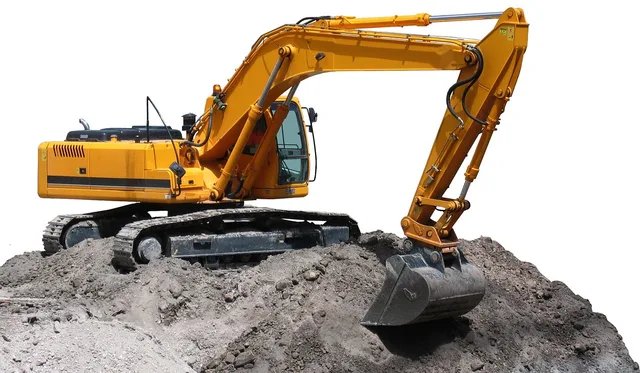
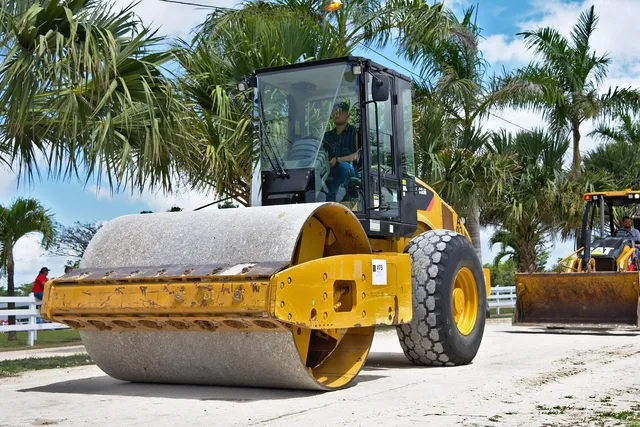
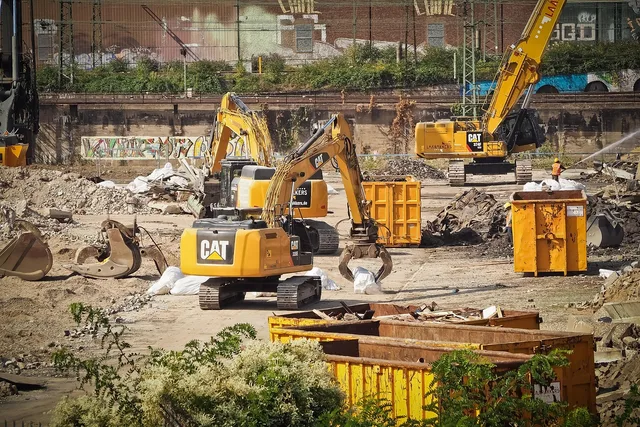
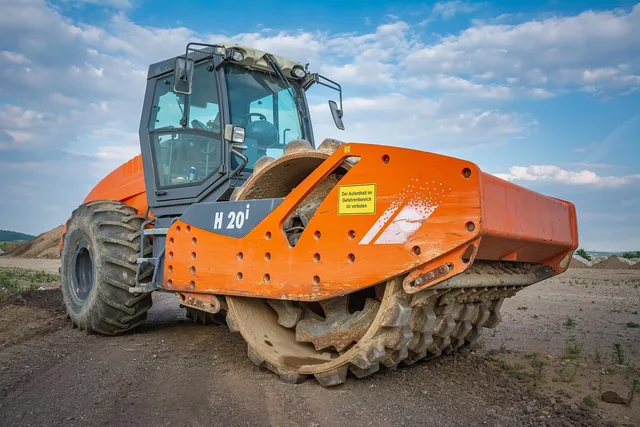
Map the fleet by work type before choosing an access model: aerial lifts, earthmoving equipment, compaction equipment, generators, pumps and attachments. Apply the same utilization and downtime review to each category, then own, rent in or subcontract based on its demand and your yard’s capability.
Own, rent or subcontract
Owned
- Best fit
- Frequent, forecastable
- Main cost
- Capital tied up
- Control
- Full
Rented in
- Best fit
- Seasonal spikes
- Main cost
- Rate escalation
- Control
- Limited at peak
Subcontracted
- Best fit
- Outside certification
- Main cost
- Margin share
- Control
- Scheduling shared
Subcontract when the work needs a certification, a licence or an insurance endorsement your yard does not carry. That is not a weakness. It is the cheaper answer, and it keeps the liability with the party that holds the qualification.
Best fit
- Owned
- Frequent, forecastable work
- Rented in
- Seasonal or project spikes
- Subcontracted
- Work needing outside certification
Main cost to watch
- Owned
- Capital tied up, storage, idle time
- Rented in
- Rate escalation, availability at peak
- Subcontracted
- Margin share, scheduling control
Whichever model you choose, the operating plan behind it belongs in writing. The rental business plan outline covers the sections a lender or a partner will expect to see before they back the fleet.
Cargo securement is a delivery duty
Every machine that leaves the yard on a trailer is a secured load, and the standard is set by rule, not by habit. The FMCSA cargo securement rules are codified at 49 CFR Part 393, Subpart I, for covered interstate moves. They set performance duties for securement, including working load limits and provisions for roll-on, roll-off and hook-lift containers. The aggregate working load limit of tiedowns must be at least one-half the weight of the article or group of articles, and the minimum number of tiedowns depends on article length and other conditions in the federal cargo-securement rule.
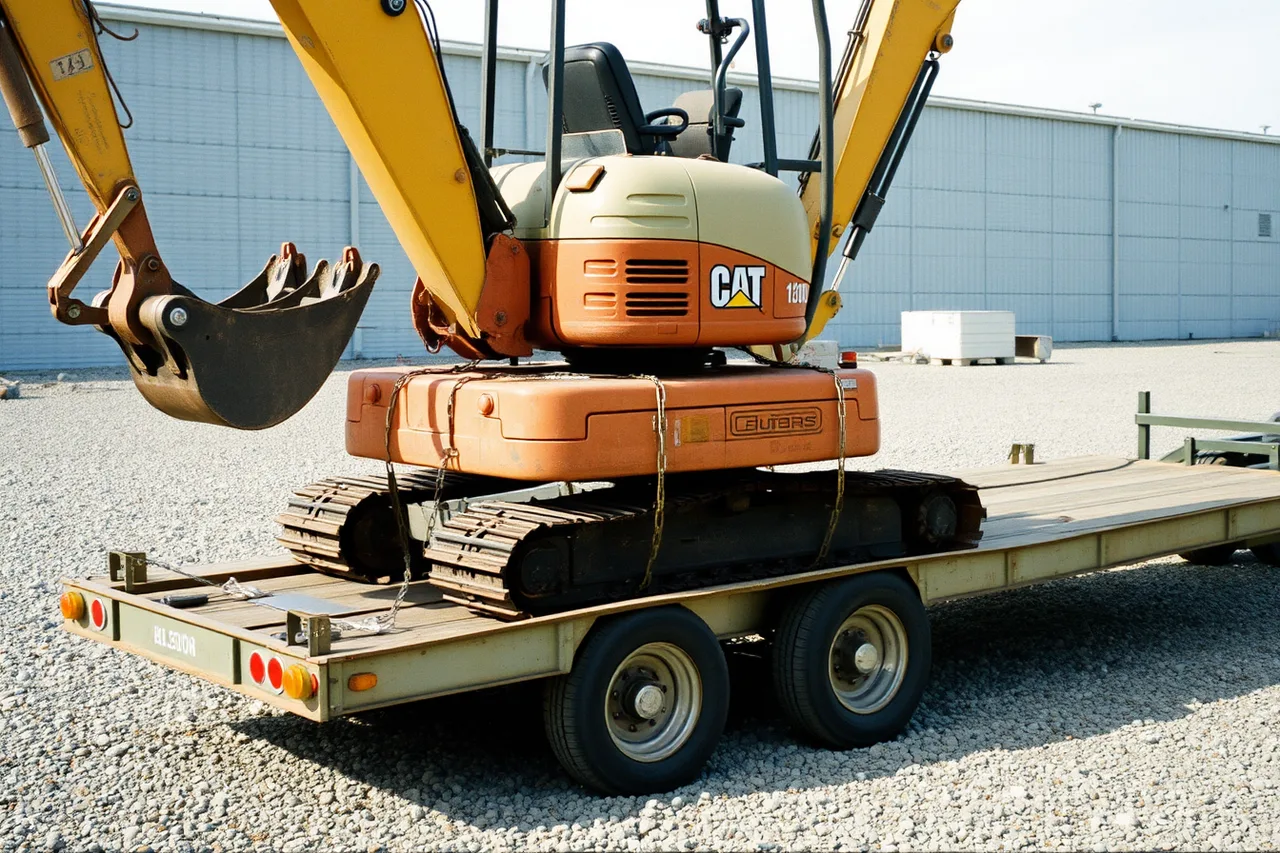
Applicability depends on the vehicle and the operation, so check which rule governs your route before you assume the yard's usual method is compliant. The practical test is simple: could the load move under braking or on a curve? If the answer is anything but no, the tie-down plan is wrong.
Securement failures are also where the insurance claim lands. A load that shifts damages the machine, the trailer and whatever is behind it, and the claim follows the method used, not the driver's intent.
Competence and hazard control
A powered industrial truck is not a general-purpose yard tool. The OSHA guidance on powered industrial trucks sets out the hazard classes, the differences between truck types and workplaces, the pedestrian risks, and the inspection and training duties that come with them.
The applicable federal rule is 29 CFR 1910.178(l): employers must ensure each powered industrial truck operator is competent through training and evaluation, and operator performance must be evaluated at least once every three years under the powered industrial truck standard.

Competence is demonstrated per truck class, on the machine the operator will actually run, and it is renewed. Treating a licence as proof of skill is the common failure. A forklift ticket does not transfer to a telehandler.
The wider frame is a safety program that finds hazards before an injury does. The OSHA safety management guidance describes a proactive program built on worker involvement, hazard identification and correction, training and management commitment. In a rental yard that means named owners for inspections, a route for reporting a defect, and a record that shows the process ran.
Use the manufacturer's instructions and applicable OSHA requirements to determine the training the machine requires. Keep operator training specific to the machine and task.
Records that survive an audit
Every asset needs a file that shows what it is, where it went, who had it and what happened to it. The IRS recordkeeping guidance states the principle plainly: a system that clearly shows income and expenses, with documents supporting purchases, sales, payroll and assets.
For employers subject to OSHA injury and illness recordkeeping requirements, keep the OSHA 300 Log, OSHA 301 Incident Report and OSHA 300A Summary, and follow the applicable requirements in 29 CFR Part 1904.
Unit file contents
- Purchase invoice
- Repair log
- Inspection sheets
- Disposal record
- Damage waivers
- Delivery notes
- Signed condition reports
IRS record-retention periods depend on the record and tax issue. As a starting point, keep records supporting a filed return for three years; keep employment-tax records for at least four years after the tax is due or paid, whichever is later; and keep records for a claim involving a loss from worthless securities or bad debt for seven years. IRS Publication 583, Starting a Business and Keeping Records, explains recordkeeping; check the applicable rule before disposing of a file.
Seasonal and regional planning
Seasonal conditions and regional access affect demand, availability and delivery planning. Plan maintenance and delivery windows before weather or site restrictions disrupt a rental.
In colder regions, winterizing is scheduled maintenance, not a reaction. Check coolant strength, block heaters, battery condition, hydraulic fluid and tire compound for expected temperatures; a machine that will not start can cost a rental day and a service call.
In areas affected by wildfire, wildfire season can shift demand. Air-quality rules and evacuation orders may close a site with little notice, stranding equipment on a job you cannot bill; check the rules and transport restrictions that apply to your route.
In remote and very cold locations, Yellowknife illustrates how permafrost and seasonal road access can constrain delivery. A machine that arrives late may not arrive until the next season, so confirm the delivery window before committing.
The rollout in order
- Week 1pull utilization and downtime cost per unit for the last twelve months. List the units that fail both tests.
- Week 2pick one unit to change. Own it, rent it in or subcontract it, and write down the expected effect on utilization.
- Week 3audit securement and operator competence against the FMCSA and OSHA standards, and fix what fails.
- Week 4compare the result with the starting figures, record what is still unresolved, and set the next review date.
The point is not a longer policy. It is a yard where the numbers decide, the rules are met, and the records prove it.
Common questions
How do I know if a machine should be sold?
Compare its utilization and downtime cost with the rest of the fleet over at least twelve months. If it sits idle through your peak season and its repair history is long, the capital is better spent on a unit that runs.
Does cargo securement apply to local deliveries?
It depends on the vehicle and the operation, so check the rule that governs your route rather than assuming. The performance duty is the same idea everywhere: the load must not move. Confirm the specifics with the authority that sets them.
Who can train our operators?
Training should come from the manufacturer or a qualified trainer, and requirements depend on the machine and workplace. In the United States, check OSHA requirements; a license for one machine class does not carry over to another.
What records should a rental yard keep?
Keep the documents that show income, expenses and asset history, plus the inspection sheets, condition reports and damage waivers for each unit. The IRS guidance covers the principle. Set the retention period with your accountant, because it varies by record type and jurisdiction.