Guides
Opening an equipment rental business: market first, then everything else
An equipment rental startup starts with who will hire the machines, what the yard can turn around, and how fast the customer's cash comes back.
What to take away
- Rent the fleet your customers already ask for. A mixed fleet bought before the first booking sits idle and eats capital.
- Price the machine, the delivery, the damage waiver and the cleaning as separate lines, so a loss-making job is visible before the invoice goes out.
- Track utilization per machine, not per fleet. One dead excavator hides behind four busy lifts.
- Build the maintenance schedule around the rental calendar, not around the workshop's convenience.
- Cash comes back after the machine does. Deposits and damage waivers are what carry the week between dispatch and payment.
This article covers equipment rental operations in general terms. Not advice on:
- equipment selection
- operator training
- road and cargo rules
- inspection
- maintenance
- workplace safety
- licensing
- employment
- tax
- insurance
- contracts
- damage claims
Those duties depend on the jurisdiction, the machine, the attachment, the site and the agreement. Confirm them with the authority that sets them and a qualified professional.
!image
What an equipment rental yard sells
An equipment rental yard sells availability. The customer is buying the certainty that a skid steer is on site at seven in the morning, with the right bucket, on the day the concrete crew arrives.
Everything else protects that promise. The fleet, the drivers and the paperwork answer one question: can we put the right machine in front of the right operator today, and get it back in a state we can rent again tomorrow? Write that promise down before you buy anything.
Win the first five bookings
The title says market first, and that means proving demand before buying iron.
- Pick one segment. Landscaping, residential construction, events or municipal work. One segment means one set of machines and customers who talk to each other.
- Buy one machine for that segment. A used compact track loader or mini excavator at a typical $35,000 to $60,000. Hire anything else from another yard until demand proves itself.
- Make five calls a day. Contractors, landscapers, builders and site managers inside your delivery radius. Ask what they rented last month and what went wrong.
- Take the first booking at a fair rate, not a loss-leading one. A discounted first hire sets the price that customer expects forever.
- Ask for the next job at collection. Repeat business costs nothing to win and it is where utilization starts to build.
Most first bookings in this trade come from a phone call, a referral from another contractor or a counter visit.
Match the fleet to the work, not to the catalogue
Start with the jobs your first customers actually do. A landscaping round needs compact track loaders, mini excavators and trenchers. A residential construction round needs lifts, compactors and concrete tools. An events and municipal round needs generators, light towers and pumps.
Three numbers per machine
Measure
- Utilization rate
- Share of available days rented
- Revenue per available day
- What it earns in the yard
- Turnaround hours
- Time from return to rentable
What it tells you
- Utilization rate
- Below break-even, sell or redeploy
- Revenue per available day
- Falling while utilization holds, review rate card
- Turnaround hours
- Rising, yard or wash bay is constraint
When to act
- Utilization rate
- Revenue per available day
- Turnaround hours
The three numbers that decide whether a machine earns its place:
| Measure | What it tells you | When to act |
|---|---|---|
| Utilization rate | Share of available days the machine is on rent | Below your break-even rate, sell or redeploy |
| Revenue per available day | What the machine earns when it sits in the yard | Falling while utilization holds, review the rate card |
| Turnaround hours | Time from return to rentable | Rising, the yard or the wash bay is the constraint |
Utilization is the number owners get wrong most often. A machine at 45 percent utilization is not "nearly busy". It is losing money against its own financing cost, insurance and service interval.
Fleet mix follows the same logic. Depth in a few categories beats breadth across many. A customer who needs one trencher this month and one lift next month will call whoever has both, but only if the first machine worked.
The turnaround cycle decides your capacity
A rental machine moves through a fixed loop:
Rental turnaround loop
- Booking
- Preparation
- Dispatch
- Delivery
- Use
- Collection
- Inspection
- Cleaning
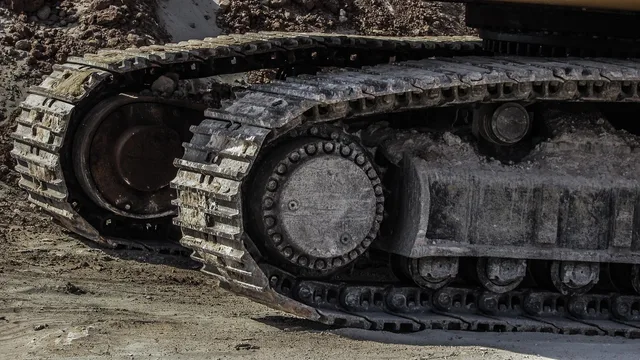
Inspection and cleaning are usually the bottleneck. A machine returned at four in the afternoon with mud in the tracks is not rentable at eight the next morning unless someone is scheduled to wash it. That is a staffing decision, not a maintenance one.
Dispatch and delivery come next. A single truck covering a wide service area spends its day driving. Route the drops and collections together, and charge delivery as its own line so the customer sees what the trip costs.
Dispatch and handover checklist
- Inspect machine against pre-delivery checklist
- Confirm attachment, keys, fuel, manuals
- Complete signed familiarization walkthrough
- Agree delivery window and site contact
- Book collection at same time as drop
Staff the yard around the loop
Four core yard roles
Role
- Rental coordinator
- Booking calendar
- Yard staff
- Preparation and inspection
- Drivers
- Machine movement
- Mechanics
- Serviceability
Owns
- Rental coordinator
- Authority to say no
- Yard staff
- Machines rentable on time
- Drivers
- Route drops and collections together
- Mechanics
- Protected preventive maintenance slots
Key rule
- Rental coordinator
- Yard staff
- Drivers
- Mechanics
The coordinator is the hinge. They hold the availability picture, quote the job, and decide when to promise a machine and when to offer a later date. Give that person the authority to say no. A yard that books past its turnaround capacity loses the next customer as well as this one.
Mechanics need protected time. If every service waits until the machine is idle, the service happens during your busiest week or not at all. Schedule preventive maintenance against the rental calendar, and hold the slot.
For wage data by occupation, state and metropolitan area, the U.S. Bureau of Labor Statistics: Occupational Employment and Wage Statistics Tables publishes estimates employers can use as one input when reviewing local pay.
Cash flow, the startup budget and break-even
Rental cash flow has a shape that catches new owners. You pay for the machine, the insurance and the yard up front. The customer pays at the end of the hire, sometimes thirty days after that.
Startup budget variables
- Fleet cost = units x average purchase price
- Delivery capacity = trucks x drops per day x working days
- Monthly fixed cost = yard rent + insurance + software + base wages
- Break-even utilization = monthly fixed cost / (units x revenue per available day x days in month)
Deposits and damage waivers are what bridge the gap. Price them as visible lines on the quote rather than burying them in the day rate. A customer who understands the waiver is less likely to argue about a damaged bucket later.
Build the startup budget in named variables you fill with your own figures:
- Fleet cost = number of units x average purchase price
- Delivery capacity = trucks x drops per day x working days
- Monthly fixed cost = yard rent + insurance + software + base wages
- Break-even utilization = monthly fixed cost / (units x revenue per available day x days in month)
Here is the same arithmetic at three fleet sizes, using typical figures. Rates, finance terms and yard rents vary by market, so treat the table as a shape to fill with your own quotes.
| Fleet | Units | Average purchase price | Monthly fixed cost | Monthly revenue at full use | Break-even utilization |
|---|---|---|---|---|---|
| Small | 5 | $50,000 | $15,300 | $33,000 | 46 percent |
| Mid | 12 | $45,000 | $33,200 | $84,500 | 39 percent |
| Larger | 25 | $40,000 | $62,000 | $165,000 | 38 percent |
The small row assumes 22 available days a month and a typical day rate of $300 for a compact track loader. Finance runs near $5,100 a month, with $3,000 for yard rent, $1,200 for insurance and $6,000 for base wages.
The larger rows scale the same lines: more units, more finance, more staff, and a break-even that falls as fixed costs spread across more machines. Finance payments assume a five year term at a typical rate.
The equipment rental business plan is where those variables get written down and tested against real quotes.
What the authorities set, and what they do not
Licensing, sanitation, transport and workplace safety requirements vary by province, state and municipality. The yard's job is to know which authority sets each one and to keep the record current.
In the United States, the U.S. Small Business Administration: SBA Business Guide sets out the general sequence of planning, launch, management and growth. The Internal Revenue Service: Starting a business covers structure, tax identification and recordkeeping. For powered industrial trucks, Occupational Safety and Health Administration: Powered Industrial Trucks describes operator competence, inspection and pedestrian risk in yards.
Below federal level, expect a state business license, a sales tax registration and a local permit for fuel storage or a wash bay. A yard running its own trucks across state lines needs a USDOT number and FMCSA registration. FMCSA rules cover driver qualification, hours of service and vehicle maintenance.
Check the state licensing board and the local code office before signing a lease.
Canada is the second market, and the same duties appear under different names.
In Canada, CCOHS publishes guidance on workplace hazards, and CSA standards cover machine guarding and equipment design. Provincial authorities such as Alberta OHS, WorkSafeBC and Quebec's CNESST set enforcement and reporting duties in their own jurisdictions.
Transport Canada governs the movement of equipment on public roads.
On the tax side, CRA administers GST/HST, and CBSA sets the rules for importing equipment across the border, including under CUSMA.
None of these sources decides your case. They tell you who does. A customs broker handles the import entry. A tax advisor handles GST/HST or sales tax treatment. A lawyer handles the rental agreement and the damage clause. Certified training, not a handbook, qualifies an operator.
Weather, distance and seasonality
Climate and seasonality set the shape of a rental year. Two patterns repeat.
The first is freeze and thaw. Winter stops some work, freezes batteries, cracks hoses and turns a wash bay into ice. Block heaters, glycol checks and indoor storage protect the parked fleet. Fewer billable days mean the rate card has to carry the season.
The second is storm and fire closure. Wildfire, flood and hurricane zones close worksites and reroute drivers with little notice. Keep a standing plan for collecting machines from a closed area, and check local air quality and emissions rules before running older diesel units in a restricted period.
Distance works the same way. Where access depends on a seasonal road, a ferry or a mountain pass, build the delivery window around the route opening, not the customer's schedule.
Common questions
How many machines do I need to open?
Enough to serve one customer segment reliably, not enough to look like a full yard. Depth in a few categories keeps utilization high and service intervals predictable. Add units when a specific machine's utilization holds above your break-even rate for a full quarter.
Should I buy or lease the fleet?
Leasing preserves cash and shifts resale risk, but it locks in a payment through the slow season. Buying suits machines with steady year-round demand and a strong resale market. Run both against your break-even utilization before deciding.
How do I price delivery?
As its own line, calculated from distance, truck time and the return trip. A flat delivery fee across a wide service area means the farthest customer is subsidised by the nearest. Review the fee when fuel or routing changes.
Who is responsible for damage?
That depends on the rental agreement and the jurisdiction, so have a lawyer draft the clause rather than copying another yard's. A clear damage waiver, a signed handover sheet and photographs at drop and collection do more for the dispute than any argument afterwards.