Guides
Marketing an equipment rental business on a small budget
Small-budget marketing for an equipment rental yard starts with the machines you already own, the contractors within driving distance, and free local listings.
What to take away
- Marketing an equipment rental business on a small budget starts with the lot: what each machine is, what it costs per day, and how far you will haul it.
- The cheapest channels are the ones you already ownyour Google Business Profile, your repeat contractors, your delivery drivers, and the machines themselves.
- Photograph and list every machine you are willing to rent, with the attachment, the rate basis, and the deposit terms on the page.
- Track cost per booked rental by channel, not clicks.
- Put the yard's real name, address, phone, hours, and pickup rules everywhere a customer might look, and keep them current.
This article covers marketing and business operations for equipment rental yards. It is general information, not advice on equipment selection, operator training, inspection, maintenance, safety, licensing, tax, insurance, contracts, or damage claims.
Those depend on the machine, the attachment, the site, and the operator. They also depend on the province or state. Confirm current duties with the manufacturer and your provincial or state OHS authority. Also confirm with a qualified professional.
Why rental marketing differs from selling
A hardware store sells a product. A rental yard sells a window of time on a machine that has to come back in resalable condition. That difference changes what the marketing has to say.
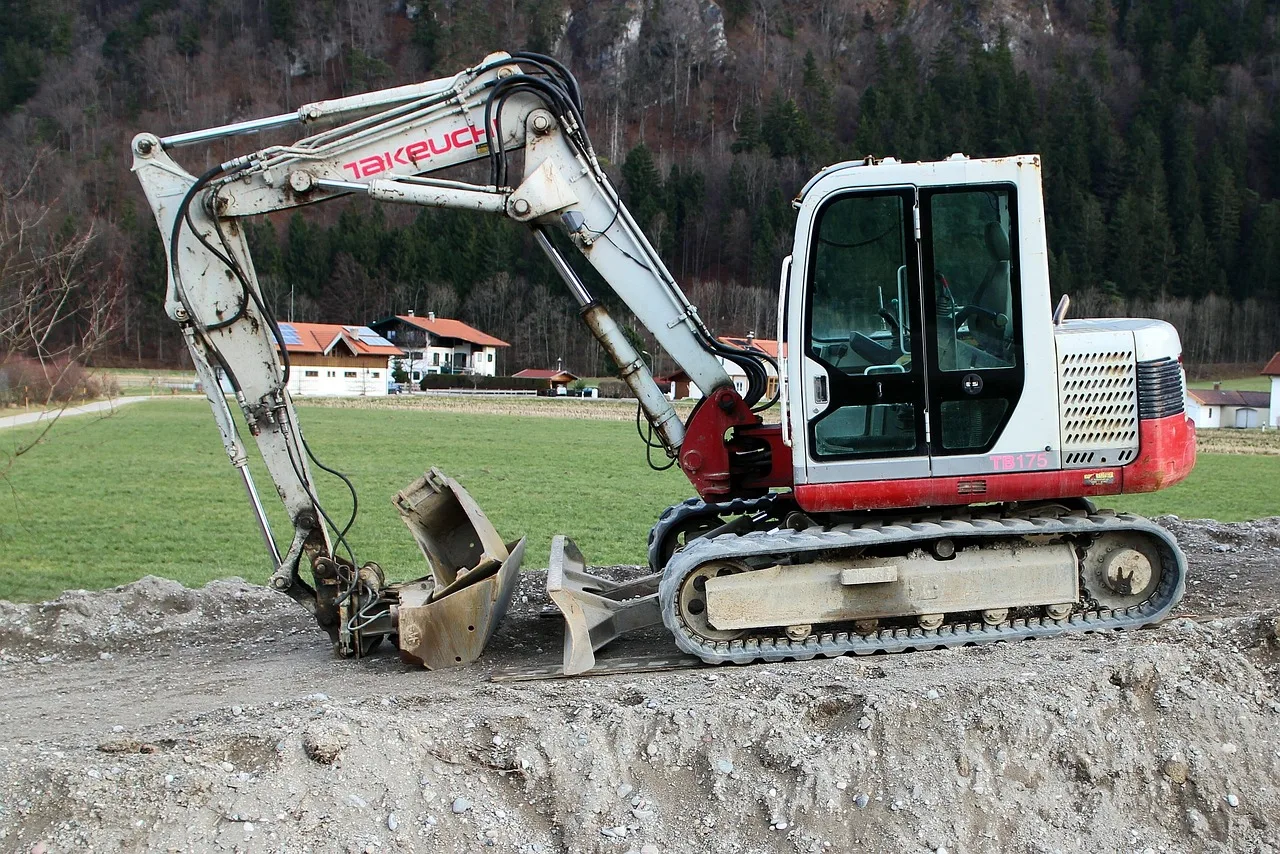
A contractor is not asking whether you stock a mini excavator. They are asking whether one is free Thursday, whether it fits through the gate, and what happens if the thumb cylinder weeps. Your marketing answers those questions before the call, or it does not.
Marketing also has a hard ceiling: your fleet. Demand you cannot fill is worse than no demand, because it costs a delivery run and a reputation. So the first marketing decision is which machines you promote, and the second is how far you haul them.
List the fleet before you list anything else
Write down every unit you are willing to rent, with its rate basis. A rate basis is how you charge: hourly, daily, weekly, or monthly, with a minimum. A machine with no published rate basis generates phone calls, not bookings.
For each unit, record:
Fleet marketing inventory
- Make, model, and year
- Attachments included or extra
- Rate basis and minimum charge
- Deposit or damage waiver terms
- Weight, transport, trailer supplied
- Inspection status and next service
List the fleet
- Machinemake, model, and year, plus the size class a contractor would recognize.
- Attachmentevery bucket, breaker, thumb, or trailer that goes with the base machine, and whether it is included or billed extra.
- Rate basishourly, daily, weekly, or monthly, and the unit each rate applies to.
- Minimumthe shortest rental you will accept, and the charge that applies below it.
- Depositthe amount, what it covers, and how it is refunded.
- Haul radiusthe zones you deliver to, the one-way fee per zone, and whether a customer may collect.
This list is your marketing inventory. Anything not on it should not appear in an ad, because a customer who books a machine you cannot deliver will not call twice.
If you are still deciding what to buy or how to structure the business, the rental business plan breakdown covers fleet mix, startup capital, and cash flow before you spend on promotion.
Low-cost channels that work for a yard
None of these need a media budget. They need time, a phone camera, and someone who answers the phone.
Google Business Profile. Free, and it is where most local rental searches land. Set your categories to Equipment Rental Agency and Tool Rental Service, post current hours, and upload photos of the actual machines. Google's guidance says local ranking leans on relevance, distance, and prominence.
Your existing customers. A concrete contractor who rented a plate compactor in April will need one again. A short text before a forecast dry spell costs nothing and converts better than an ad. Ask what jobs are coming up, not whether they want to rent.
Delivery drivers and yard staff. They stand in front of customers all day. Give them a one-page rate sheet and one rule: if a customer mentions a job, note the machine and the date. That lead pipeline costs nothing but attention.
The machines themselves. A clean unit with your name, phone, and website on a decal is a moving billboard at every job site in the region. Sign shops typically quote $75 to $250 for a cut-vinyl set on one machine, a one-time cost.
Supplier counters. Leave rate cards where contractors already stop: the pro desk at Home Depot or Lowe's, an 84 Lumber yard, or a Fastenal branch. A few hundred cards and a counter stand typically cost $50 to $150.
Seasonal email or text to past renters. A short note before a busy season costs little. Mailchimp's free tier covers 500 contacts and 1,000 sends a month; Constant Contact's Lite plan runs about $12 a month as of 2026. Keep the message to what is available and when.
Community and trade group listings. Local chapters of Associated General Contractors, Associated Builders and Contractors, the National Association of Home Builders, and county Farm Bureaus often publish member directories at little or no cost. So do municipal vendor lists.
Marketplace and local classifieds. Facebook Marketplace, Craigslist, and Nextdoor post free and reach a local radius. They suit one-off units, a new attachment, or a slow-week special. Keep the photo current, because a stale listing invites calls you cannot fill.
Job site signage on your own deliveries. When you drop a machine, a small sign on the fence or the unit, with the owner's permission, reaches the neighbors.
What these share: they reach people who already have a job to do. Broadcast advertising reaches everyone, including people who will never rent a compactor.
What each channel costs and what it returns
The cash costs below are typical ranges, not quotes. Substitute your own figures once you have run a channel for a month.
Channel cost and return
Channel
- Google Business Profile
- $0
- Past-customer outreach
- $0
- Machine decals
- $75 to $250
- Supplier counter cards
- $50 to $150
- Seasonal email or text
- $0 to $15/mo
Cash cost
- Google Business Profile
- Calls, direction requests
- Past-customer outreach
- Bookings from list
- Machine decals
- Calls mentioning decal
- Supplier counter cards
- Calls from location code
- Seasonal email or text
- Bookings per send
What to measure
- Google Business Profile
- Past-customer outreach
- Machine decals
- Supplier counter cards
- Seasonal email or text
What each channel costs
| Channel | Cash cost | Time cost | What to measure |
|---|---|---|---|
| Google Business Profile | $0 | 2 to 4 hours to set up, then 1 hour a month | Profile calls and direction requests |
| Past-customer outreach | $0 | 1 hour per 100 customers | Bookings from the list |
| Driver and yard referrals | $0 to $50 for printed rate sheets | Training time | Leads logged per week |
| Machine decals | $75 to $250 per machine, typical | None after install | Calls that mention the decal |
| Supplier counter cards | $50 to $150 for cards and a stand | Restocking visits | Calls from the location code |
| Seasonal email or text | $0 to about $15 a month | 1 hour per send | Bookings per send |
| Trade group directory | $0 to a few hundred dollars a year in dues, typical | Application time | Inquiries citing the directory |
| Marketplace and classifieds | $0 | Photo and listing time | Messages and bookings |
Cost per booked rental is total channel cost divided by the rentals that channel produced in the period. If you do not know the denominator, you do not know whether the channel works.
A worked example with the table's channels. A yard spends $150 on counter cards and a stand, and nothing on past-customer texts.
The texts bring 9 bookings, the cards bring 3. Cost per booked rental is $0 for the texts and $50 for the cards. A card may still pull the same contractor back for years, so read the number as a comparison, not a verdict.
Pricing, deposits, and damage waivers in the ad
Your published rate is a marketing decision as much as a financial one. A rate that is too low fills the yard with the wrong customers and empties it of margin. A rate that is too high with no explanation gets no calls.
Delivery pricing figures
- 10 milestypical delivery radius
- $35 to $95one-way delivery fee inside radius
- Zonehow most yards quote delivery
State the rate basis, the minimum period, and whether fuel, delivery, and the damage waiver are included. A damage waiver is not insurance. It is a contractual charge that limits the customer's exposure, and its terms belong in the rental agreement, not a footnote.
Delivery pricing often decides the job for a small contractor. In most markets, yards quote by zone, with a one-way fee that commonly runs $35 to $95 inside a 10-mile radius. If you charge a fuel surcharge, say so. If you have a free radius, say that too.
Customers who find a delivery charge after booking feel misled, and the review reflects it. Do not invent a competitor's rate to justify yours. Publish your own terms and let the customer compare.
Reviews, claims, and what you may say
Ask every customer after the machine comes back, including the ones you expect to complain. The U.S. Federal Trade Commission's guide to soliciting and paying for online reviews says requests should go to genuine users and incentives must not distort the picture.
The same principle covers advertising. The FTC's advertising FAQs for small business set out that claims must be truthful and supported, and that endorsements must reflect honest experience.
For a rental yard, that means no "best rates in the province" unless you can show it, no stock photo of a machine you do not own, and no discount offered in exchange for a rating. Answer a negative review without naming the customer or discussing their account.
The first thirty days on a small budget
First thirty days
- Week 1Photograph fleet, publish rate basis
- Week 2Claim and correct Google profile
- Week 3Print cards, train staff, contact past customers
- Week 4Total cost and bookings, drop dead channels
Week 1 costs nothing and sets the base. Write the fleet list from the section above. Photograph each machine with a phone, in daylight, with the attachment fitted. Claim or update the Google Business Profile: categories, hours, phone, address, photos. Print one rate sheet for the counter and the trucks.
Week 2 is still zero cash. Text every past customer from the last 12 months with one line about what is free next week. Brief drivers and yard staff on logging leads in a shared note or spreadsheet. Set up free listings on Facebook Marketplace and Nextdoor for the one-off units.
Week 3 spends the first money, and only on print. Order machine decals for the units that go out most, typically $75 to $250 per machine. Order counter cards and one stand, typically $50 to $150, and place them at two supplier counters. Keep the total under $400 for the month.
Week 4 is measurement, not spending. Count bookings by channel and divide each channel's cash cost by its bookings. Drop any channel that produced no bookings and still costs time or money. Keep the rest for another month before adding email or paid listings.
Budget allocation: hold the month under $400 in cash. At the typical prices above, two decal sets and one counter card order use most of it. Staff time is the larger number, and it belongs on the same ledger.
Common questions
How much should a small yard spend on marketing?
For most yards, the cash budget can start near zero and grow only when a channel proves it produces bookings. The real cost is staff time, and that time should be tracked the same way you track a delivery run.
Do I need a website if I have a Google profile?
A profile gets you found. A website lets you list the full fleet, the rate basis, and the terms in one place you control. Most yards need both, but the profile comes first because it is free and it is where local searches land.
How do I market machines I only have one of?
Promote the capability, not the unit. "Mini excavator with thumb, available most weekdays" tells the customer what they can do. Post the machine on Facebook Marketplace, Craigslist, and Nextdoor, which cost nothing and reach a local radius. If it is booked, offer the next available date rather than losing the call.
What should I never put in an ad?
Never state a rate, a capacity, or a certification you cannot back up, and never imply a machine is available when it is out on rent. Licensing, transport, and operator certification rules vary by province and state, so name the authority and let the customer confirm rather than promising on their behalf.