Guides
What it costs to start an equipment rental business, and where the money comes from
Startup costs for an equipment rental business run from the first machine to the yard that keeps it earning, and the funding follows that order.
What to take away
- The first real cost is a machine that earns. A used 5,000 lb telehandler typically runs $25,000 to $45,000, and a used 3-ton mini excavator $20,000 to $40,000. A showroom earns nothing.
- Starting an equipment rental business with a used three-machine fleet, a truck and trailer, insurance, and a fenced lot usually costs $80,000 to $150,000.
- Working capital covers the gap between the rental day and the invoice, and that gap is where most first-year yards run out of cash.
- Funding comes in named formsSBA 7(a) and 504 loans, dealer captive financing, an equipment line of credit, and revenue-based lending.
- Yard-side safety proof starts with OSHA Powered Industrial Trucks, because a forklift moves every machine you deliver.
- Price a rental day at roughly 1% of the machine's new value so it carries its own bad days: idle weeks, damaged returns, and the winter months when nothing moves.
Cost lines that actually appear on a startup budget
A rental yard buys four things before it rents anything: machines, a place to keep them, a way to move them, and the paperwork that lets a contractor sign.
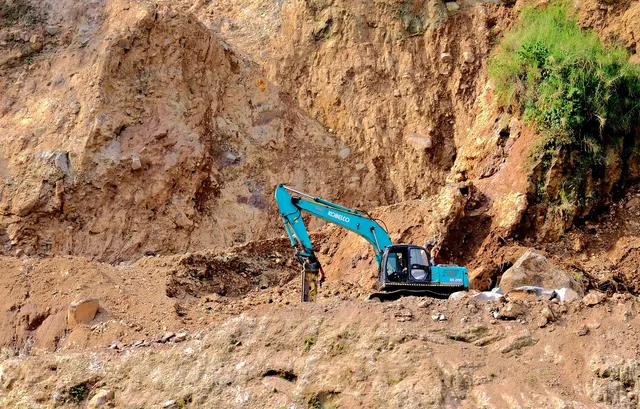
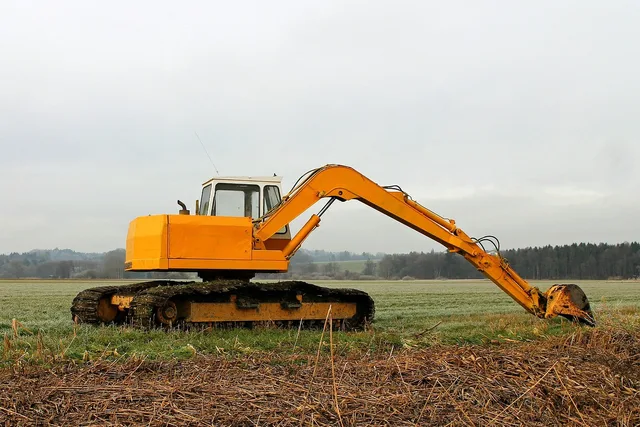
Fleet. A starter set is one telehandler, one mini excavator, one skid steer, and a plate compactor. Used telehandlers from JLG, Genie, and Skyjack run about $25,000 to $45,000. Used 3-ton excavators from Kubota, Bobcat, and Takeuchi run $20,000 to $40,000, and used skid steers $15,000 to $35,000.
New units cost roughly double, and auction iron arrives without a warranty. A new plate compactor is $1,200 to $2,500.
Yard or laydown space. A fenced half-acre with power, a wash pad, and room to turn a trailer typically leases for $1,000 to $3,500 a month. Ask the zoning office what a contractor yard is allowed on the parcel before you sign. A conditional use permit adds roughly $500 to $5,000 in fees and review.
Transport. A 3/4-ton truck and a 14,000 lb deckover trailer move most compact equipment. The truck lists at $45,000 to $60,000 new, or $25,000 to $40,000 used, and the trailer runs $6,000 to $12,000. Anything larger needs a heavier combination and a license class to match.
Licensing and insurance. An LLC filing fee runs $70 in California, $300 in Texas, and $50 to $500 elsewhere. Commercial auto costs $2,000 to $4,500 a year for one truck, and general liability $1,500 to $5,000. An inland marine or equipment floater policy is quoted at 0.5% to 1.5% of the insured fleet's value.
Software and admin. Point of Rental, Texada, and Quipli sell rental management platforms to independent yards, with small-yard plans typically $200 to $600 a month. Accounting and a phone line add $100 to $300. These are subscriptions, and they renew whether the yard is busy or not.
Where the money comes from, by name
Where the money comes from
| Source | What it is | Who it suits |
|---|---|---|
| SBA 7(a) loan | A partially guaranteed bank loan, up to $5 million, with terms to 10 years | Yards with a business plan and projections |
| SBA 504 loan | A fixed-rate fixed-asset loan: 50% bank, 40% CDC, 10% borrower, up to $5.5 million | Buying a yard building or a large machine |
| SBA Microloan | Up to $50,000 through a nonprofit intermediary, typically 8% to 13% | A first machine, a truck, or tools |
| Dealer captive financing | Cat Financial, Kubota Credit, and John Deere Financial lending on their own machines, often 10% to 20% down over 24 to 60 months | Buying new units with a warranty |
| Equipment financing | A loan secured by the machine itself, typically 6% to 15% APR | Units added without touching working capital |
| Equipment line of credit | Revolving credit against the fleet's value, often prime plus 1 to 4 points | Seasonal swings and repair bills |
| Revenue-based lending | Repayment tied to a share of monthly receipts, commonly 2% to 10% of revenue | Steady invoices, thin credit history |
No federal grant pays for a rental fleet. SBA grant money goes to research and counseling, not excavators. A first-year yard's ask usually lands between $75,000 and $250,000.
The U.S. Small Business Administration: SBA Business Guide sorts ownership into planning, launch, management, and growth, and its startup-cost worksheet is the plainest place to start the arithmetic. Variable 7(a) rates are capped at prime plus roughly two to three points, and SBA charges a guaranty fee on the portion it backs.
The Internal Revenue Service: Starting a business covers structure, tax identification, the taxes that apply, and recordkeeping from day one. Set that up before the first invoice, not after. Section 179 lets a yard deduct qualifying equipment in the year it goes into service, under an annual cap that has topped $1 million in recent years.
For the yard itself, Occupational Safety and Health Administration: Powered Industrial Trucks lists the hazards, the operator competence requirements, and the inspection points that apply every time a forklift picks a machine off a rack. Operator evaluations are due at least once every three years.
Worked example: the first construction season
A yard opens in March with a used telehandler, a mini excavator, and a leased lot. Call it $55,000 of used iron, a $9,000 deckover trailer, $4,000 in insurance deposits, and $1,800 a month for the lot. Two contractor accounts sign on, and their paperwork carries a signed pre-delivery inspection on every machine.
By June, peak demand fills the calendar and one machine comes back with a bent boom before the next booking. A repair like that typically bills $3,000 to $8,000, and it lands before the rental income from the damaged unit arrives. That week decides the year, and the replacement machine has to come from somewhere.
The math on a good day: a used mini excavator that cost $25,000 rents for $250 to $400 a day and about $1,000 a week in most markets. At 12 rental days a month it bills roughly $3,600, so it pays for itself inside a season and a half before fuel, repairs, and insurance.
Three habits carry a yard through it. Price a rental day so it carries its own bad days. Keep records as you go, because a damage claim without a signed pre-delivery inspection is a claim you pay. Ask every contractor who else on the site needs a machine.
Common questions
What does a rental yard need before it takes a booking?
A registered business, insurance that names the machines and the drivers, and a signed rental agreement with a pre-delivery inspection attached. Insurance on a three-machine fleet typically runs $4,000 to $10,000 a year, and filing fees $50 to $500. Confirm the licensing and safety requirements with your provincial or state authority, because they vary by municipality.
How much working capital should a first-year yard hold?
Enough to cover three months of fixed costs plus one major repair. The formula is (monthly lease + insurance + software) x 3.
On a $1,800 lease, $600 of insurance, and $250 of software, that comes to about $8,000. Add $25,000 for a replacement machine, and the floor sits near $33,000.
Which funding source fits a yard with no trading history?
Equipment financing, because the machine is the collateral. Captive lenders such as Cat Financial and Kubota Credit write 24 to 60 month notes, often with 10% to 20% down. An SBA 7(a) loan usually wants a trading record or a co-signer, so build one season of invoices first, or start with a microloan capped at $50,000.
Where does the first year usually go wrong?
Treating a busy season as proof the pricing works. A machine that bills $3,600 in June can bill nothing in January while the lot lease, insurance, and software keep running. Damaged returns and unpaid invoices land after the peak too, so test the model against a slow month before you buy the next machine.
Read the equipment rental startup and market guide next for the market side, and how to start an equipment rental business for the launch sequence. When you are ready to write it down, the equipment rental business plan shows what lenders expect to see.