Guides
How to Prevent Equipment Rental Theft on Your Yard
Prevent equipment rental theft on U.S. yards with layered fencing, lighting, inventory control and GPS tracking; includes Texas and Ohio police reporting norms.
What to take away
- Prevent equipment rental theft by layering perimeter fencing, gate lighting, inventory records and GPS tracking for rentals in that order.
- U.S. yards report theft to local police, not a federal registry; keep serial numbers and photographs ready.
- A numbered sequence below turns these controls into a repeatable yard routine.
- Check lighting at each gate with a lux meter after dark; if a gate reads below 10 lux, fix lighting before the next close.
What has to be true before the first step
Yard layout is the first layer of equipment rental yard security. Before layering controls, a yard manager needs a clean asset list:
- Make, model, year and serial number for every machine.
- A current photo of each machine.
- One printed copy for the office, one in a locked drawer offsite.
That second copy matters after a burglary, when the office computer may be stolen too.

Fencing, lighting, inventory records and GPS are rental equipment theft deterrents that work only when layered. A single control fails when the next one is missing.
Missing machines create more than replacement cost; equipment rental downtime is what customers remember after a delivery window closes. Confirm travel lanes and storage clearances meet 29 CFR 1910.176.
A narrow lane forces a driver to leave a skid steer near a fence with its key in the ignition. A Texas yard often sets its drive lane wide enough for two machines to pass, while a smaller Ohio lot uses a two-step gate path. Both need enough room to park equipment without blocking an aisle or an exit.
The sequence
The sequence starts at the perimeter and ends at the machine itself.
- Walk the fence line at dusk and mark every gap, sag or missing chain link. Fix fencing before adding cameras; no camera deters if a thief can drive through. While you are at the fence, confirm that materials stored near the line meet 29 CFR 1910.176, the clearance rules in OSHA's materials handling standard. Pallets and pipe racks can hide a cut link.
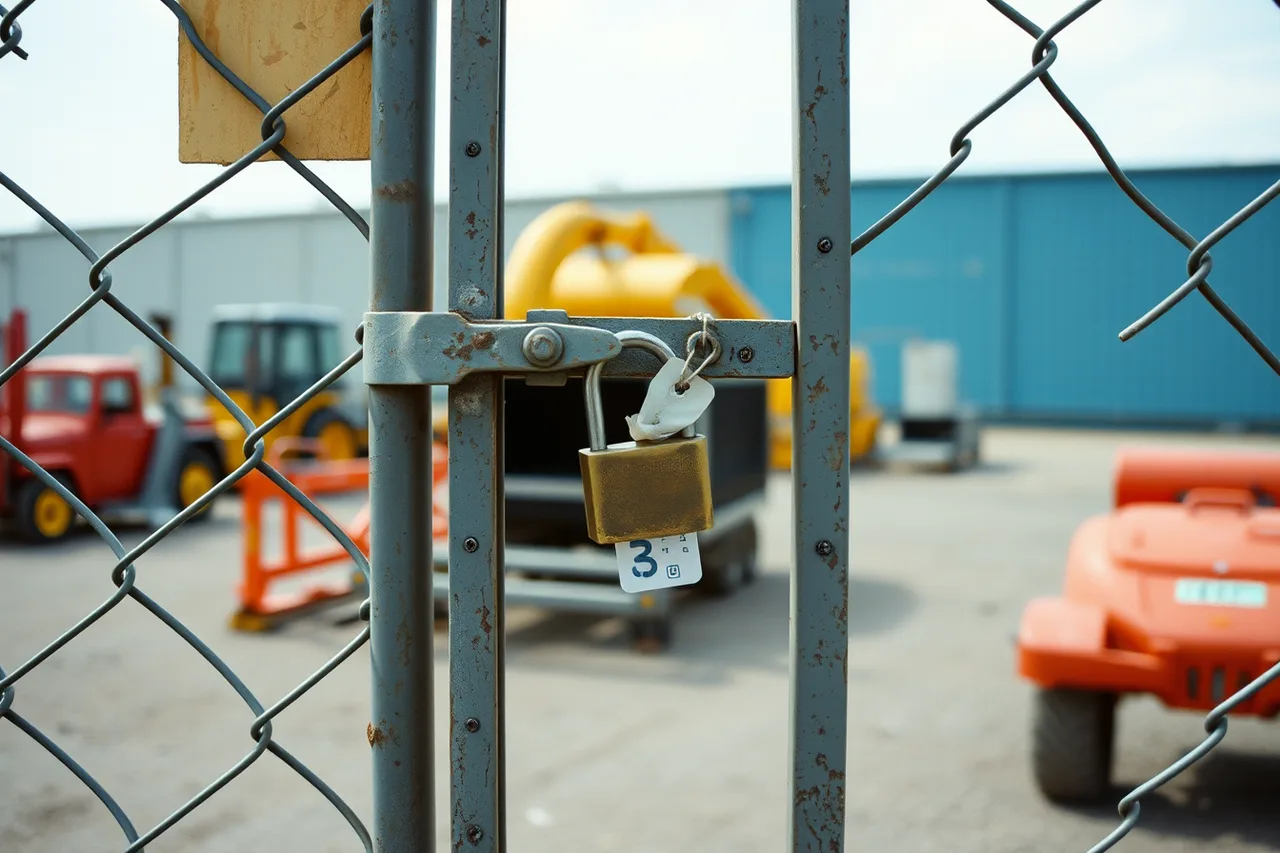
- Number every gate and test each lock from the outside. Check gate lighting with a lux meter after dark; a gate below 10 lux gets the fixture fixed before the next close. Use a numbered key control log, not a single master key left in the office.
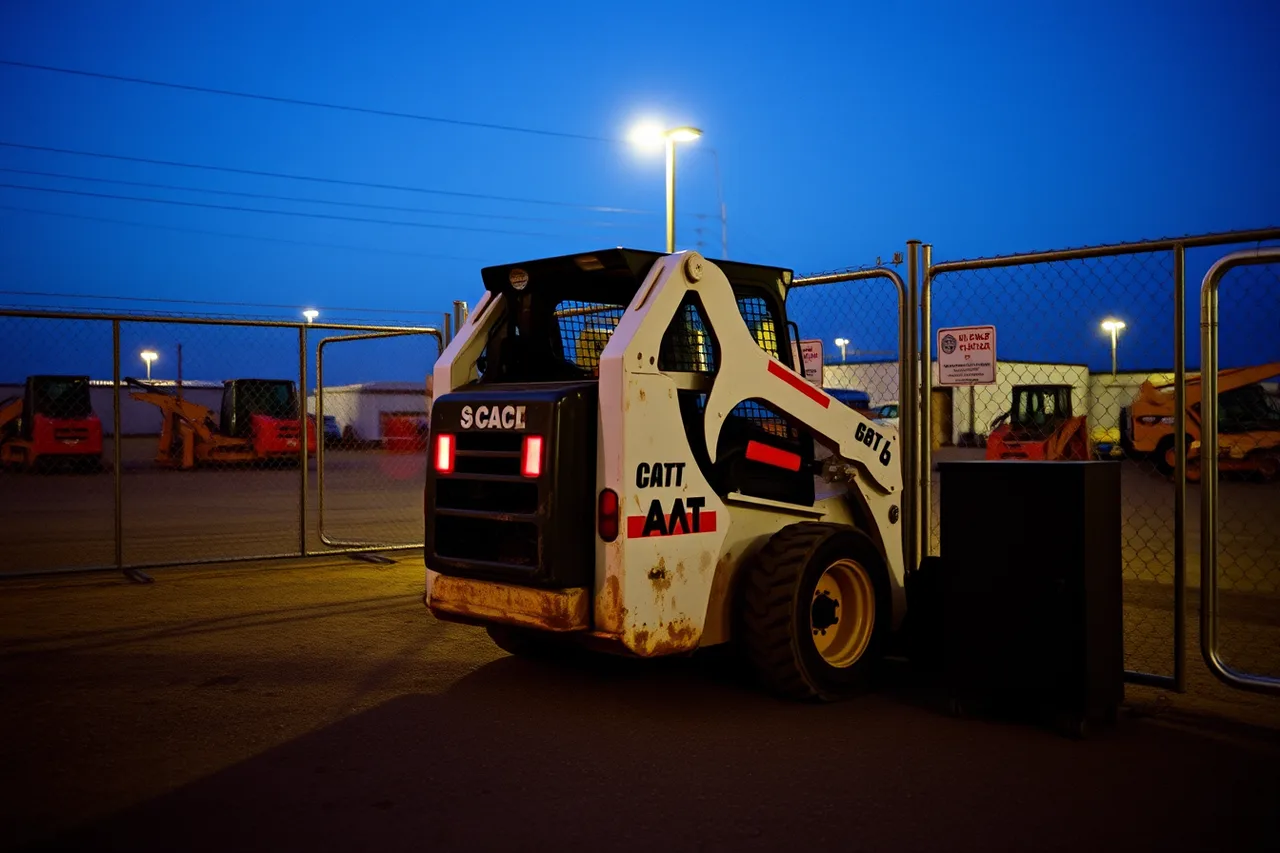
- Set a strict end-of-day parking patternsmall machines go inside the lighted compound, keys go into a lockbox, and batteries on movable equipment get disconnected.
- Install GPS trackers on the 10 highest-value machines first, and record each tracker's serial number in the asset file.
- Take one close photo and one wide photo of every machine before the gate locks; time-stamp the image.
The step that decides the result
Step 3, the end-of-day parking pattern, decides the result more than any camera count. A missing machine also shows up in equipment rental yard cost as lost rental days and higher insurance. A tracker records where the machine went; the parking pattern stops the machine from leaving in the first place.
How to check each step came out right
A visible check catches the obvious problem. A measurable check catches the slow drift. Keep the yard orderly enough to see a cut link from the office; that housekeeping standard is 29 CFR 1910.22, OSHA's walking-working surfaces standard.
| Step | Visible check | Measurable check | Fails if |
|---|---|---|---|
| Fence line | No debris piled within three feet of the fence | Walk the perimeter weekly and count holes; record zero holes in a log | Any hole wide enough for a hand |
| Gate locks | All padlocks match the numbered lock on the tag | Test each gate once per shift and record key return time | One lock opened without a key log entry |
| End-of-day parking | Machines inside the compound, no keys in ignitions | Manually check the last machine at close; battery disconnect switch in off position | One machine outside the line with a key present |
| GPS | Tracker shows motion when machine moves | Trigger a test ping from the software and confirm location within 50 feet | No return ping within 10 minutes |
| Photo records | Time-stamped photo shows serial plate | Compare photo serial to asset list once a week | Serial missing or unreadable |
If a check fails, fix the item before the next close, not next week.
What to do when a step goes wrong
The common failure is a gate left unlocked at close. If that happens, do not just relock it. Walk every machine, document missing items, and reset every lock code.
In Texas, log an attempted theft through the local police non-emergency line, which many cities route through 311. In Ohio, a yard outside city limits files the same report with the county sheriff's office. That report can alert nearby yards.
Then photograph the gate area and the lock tag before you leave. A yard that recovers cleanly from that failure is a yard customers notice, which is how equipment rental referrals grow.
When to stop and hand it to a professional
The point to hand off is a failed GPS test with no return ping within 10 minutes, or a repeated gate failure on two consecutive nights. A locksmith or security contractor should take over the gate controller.
Before you write the next audit, run the same checks as equipment rental quality checks owners actually run, so theft controls stay part of daily operations. Do not hand off a simple fence hole; that is a same-day yard repair.